
If you regularly record YouTube videos by yourself, a flip screen can be one of the most useful features your camera can have. Instead of guessing whether you’re in focus or properly framed, you can turn the screen toward yourself and monitor the shot while recording.
For talking-head videos, product reviews, tutorials, beauty content, travel vlogs and Shorts, a camera with a fully articulating or flip-out screen makes the recording process much easier.
But a good YouTube camera needs more than just a selfie screen. Autofocus, microphone support, 4K video, stabilization, battery life, lens flexibility and low-light performance can make a much bigger difference to the finished video.
In this post, we’ve selected some of the best cameras for YouTube videos with flip screens, with options for beginners, vloggers, product reviewers and serious creators in India.
Affiliate Disclosure: This article may contain affiliate links. If you purchase through a qualifying link, we may earn a commission at no additional cost to you.
Quick Picks: Best Flip-Screen YouTube Cameras
| Camera | Approx. India Price* | Screen | Best For | Our Rating |
|---|---|---|---|---|
| Sony ZV-E10 II | ₹80,000–₹1.05 lakh | Fully articulating | Serious YouTubers | ⭐⭐⭐⭐⭐ 4.8/5 |
| Canon EOS R50 | ₹60,000–₹70,000 | Fully articulating | Beginners | ⭐⭐⭐⭐⭐ 4.7/5 |
| Canon EOS R50 V | ₹70,000–₹80,000 | Fully articulating | Video creators | ⭐⭐⭐⭐⭐ 4.7/5 |
| Sony ZV-E10 | ₹50,000–₹70,000 | Fully articulating | Budget creators | ⭐⭐⭐⭐☆ 4.5/5 |
| DJI Osmo Pocket 3 | ₹40,000–₹55,000 | Rotating touchscreen | Travel & vlogging | ⭐⭐⭐⭐⭐ 4.6/5 |
| Sony ZV-E1 | ₹1.8 lakh+ | Fully articulating | Professional creators | ⭐⭐⭐⭐⭐ 4.8/5 |
*Prices are approximate India street prices and can change with lens kits, availability, seller discounts and seasonal offers. Recent India guides similarly place the DJI Pocket 3 around ₹40,000–₹55,000, Canon EOS R50 around ₹60,000–₹70,000 and Sony ZV-E10 II around ₹88,000–₹1.05 lakh depending on configuration.
1. Sony ZV-E10 II — Best Overall Flip-Screen Camera for YouTube
⭐ Rating: 4.8/5
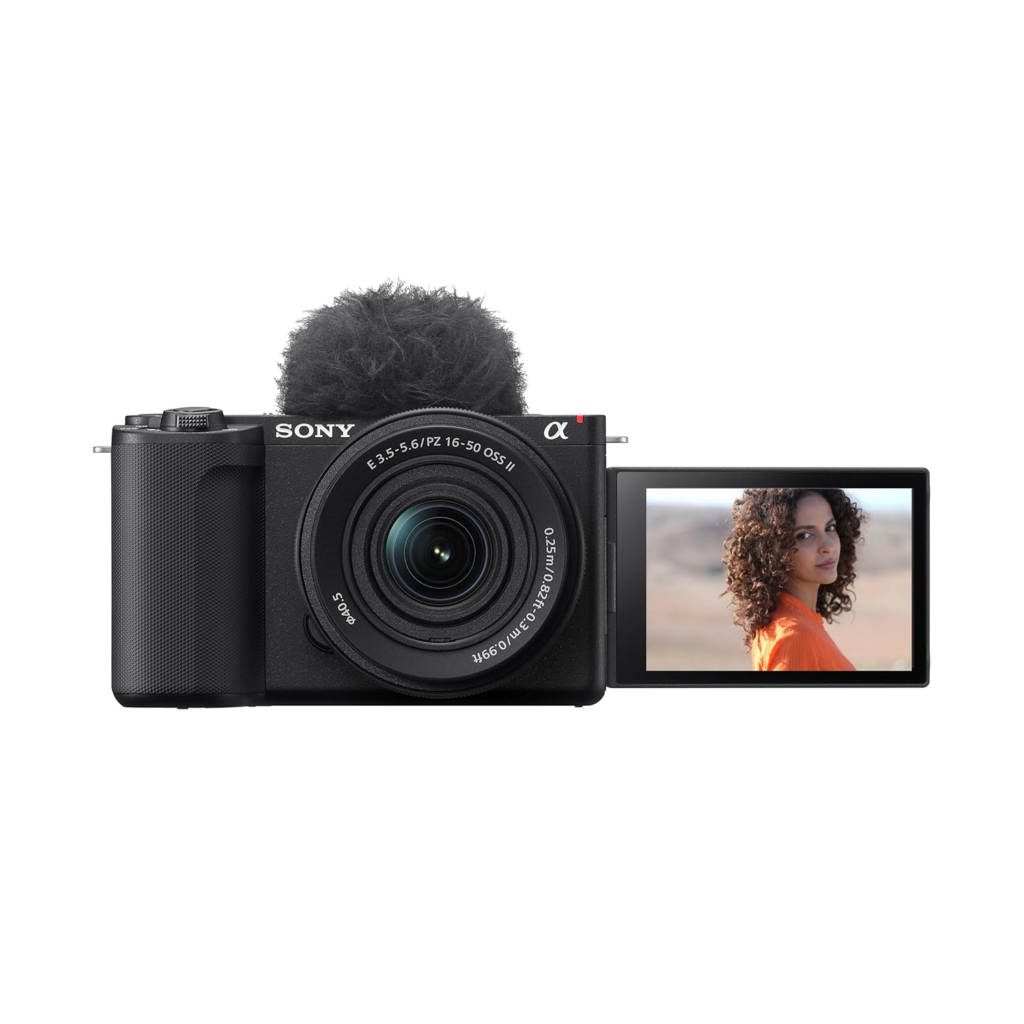
The Sony ZV-E10 II is one of the strongest choices for creators who want a dedicated YouTube camera that they can continue using as their channel grows.
It combines an APS-C sensor, interchangeable lenses, strong autofocus and a fully articulating screen. Current 2026 YouTube-camera guides rank it highly for serious creators because it combines video quality, creator controls and lens flexibility.
Why You Should Consider It
- APS-C sensor
- Fully articulating display
- 4K video up to 60fps
- 10-bit video recording
- Excellent subject tracking
- Interchangeable lenses
- Compact creator-focused body
- Good microphone connectivity
- Large Sony E-mount lens ecosystem
Best For
Talking-head videos, product reviews, tutorials, educational channels, beauty creators and professional YouTubers.
Pros
- Excellent autofocus
- High-quality 4K video
- Flip-out screen makes solo recording easy
- Excellent lens selection
- Compact body
- Strong upgrade potential
Cons
- More expensive than entry-level options
- No built-in electronic viewfinder
- Lens cost can increase the overall setup price
Our Verdict: If YouTube is becoming a serious project, the ZV-E10 II is one of the best long-term investments in this list.
🛒 Check Sony ZV-E10 II Price
2. Canon EOS R50 — Best Flip-Screen Camera for Beginners
⭐ Rating: 4.7/5
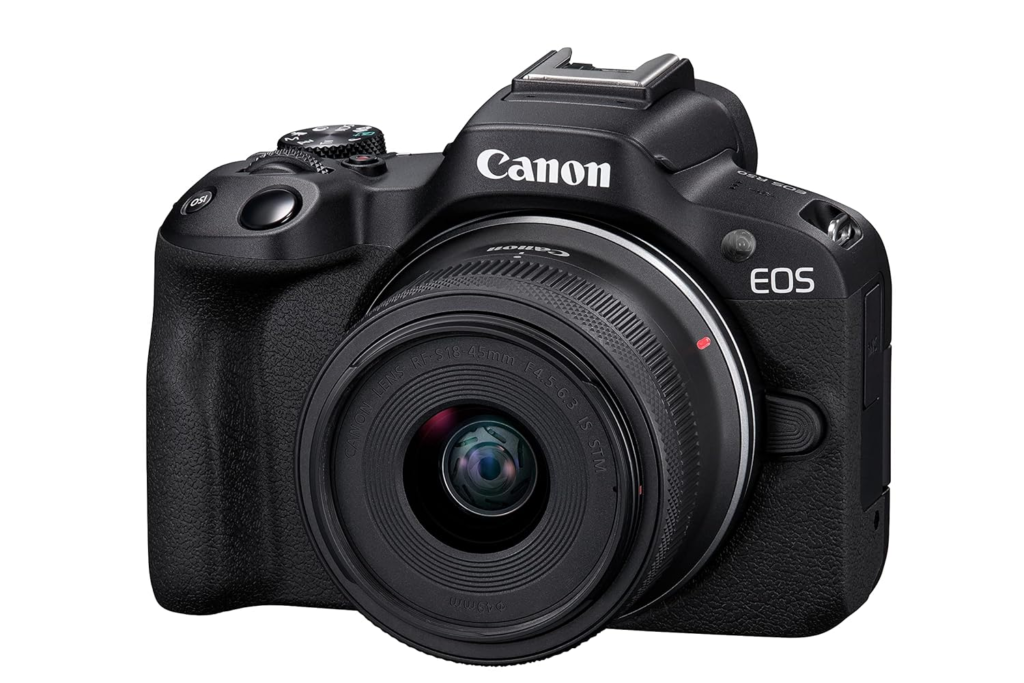
The Canon EOS R50 is an excellent starting point for someone moving from a smartphone to a dedicated camera.
Its fully articulating screen lets you see yourself while recording, while Canon’s autofocus makes keeping your face sharp relatively straightforward.
Recent India camera guides position the EOS R50 as a strong beginner choice, particularly for talking-head videos, product reviews and tutorials.
Key Features
- 24.2MP APS-C sensor
- Fully articulating touchscreen
- 4K video
- Excellent autofocus
- Interchangeable lenses
- Compact body
- Built-in electronic viewfinder
Best For
Beginners, educators, reviewers, home-studio creators and hybrid photo/video users.
Pros
- Beginner-friendly controls
- Excellent autofocus
- Good image quality
- Fully articulating screen
- Compact and lightweight
- Useful for both photos and video
Cons
- Kit lens may limit low-light performance
- Not as video-focused as the ZV-E10 II
- Battery life is not its strongest feature
Our Verdict: A particularly good choice if you want one camera for YouTube, photography and family/travel photos.
3. Canon EOS R50 V — Best Canon Camera for Video Creators
⭐ Rating: 4.7/5
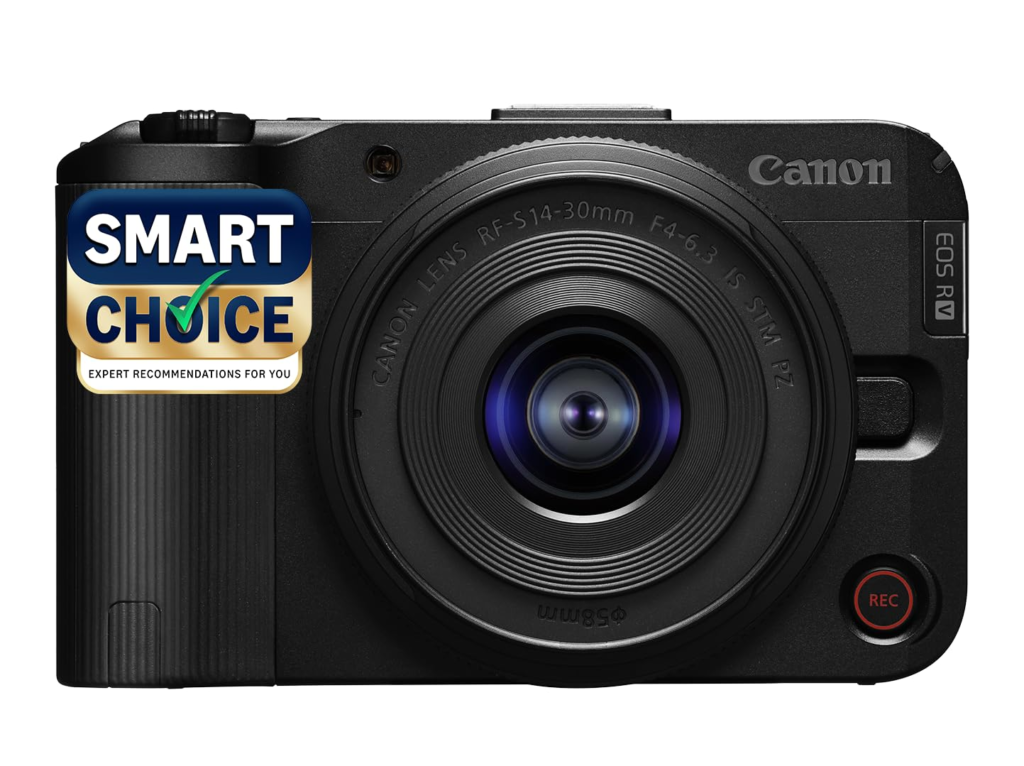
If your primary goal is creating videos rather than taking photographs, the Canon EOS R50 V deserves serious consideration.
It takes the approachable R50 concept and adds more video-oriented features and controls. Current India guides place it in the roughly ₹70,000–₹80,000 range depending on the kit.
Why It Works for YouTube
The fully articulating screen makes solo shooting easier, while its video-focused controls are useful for creators who frequently record themselves.
Best For
- YouTube channels
- Product reviewers
- Live streaming
- Tutorials
- Talking-head videos
- Vertical video creators
- Shorts
Pros
- Video-focused design
- Fully articulating display
- Canon autofocus
- Interchangeable lenses
- Good creator controls
- Suitable for vertical content
Cons
- More expensive than the basic R50
- Less compelling if you primarily shoot still photos
Our Verdict: A strong Canon alternative to the Sony ZV-E10 II for creators who prefer Canon’s ecosystem.
4. Sony ZV-E10 — Best Budget Sony Camera for YouTube
⭐ Rating: 4.5/5
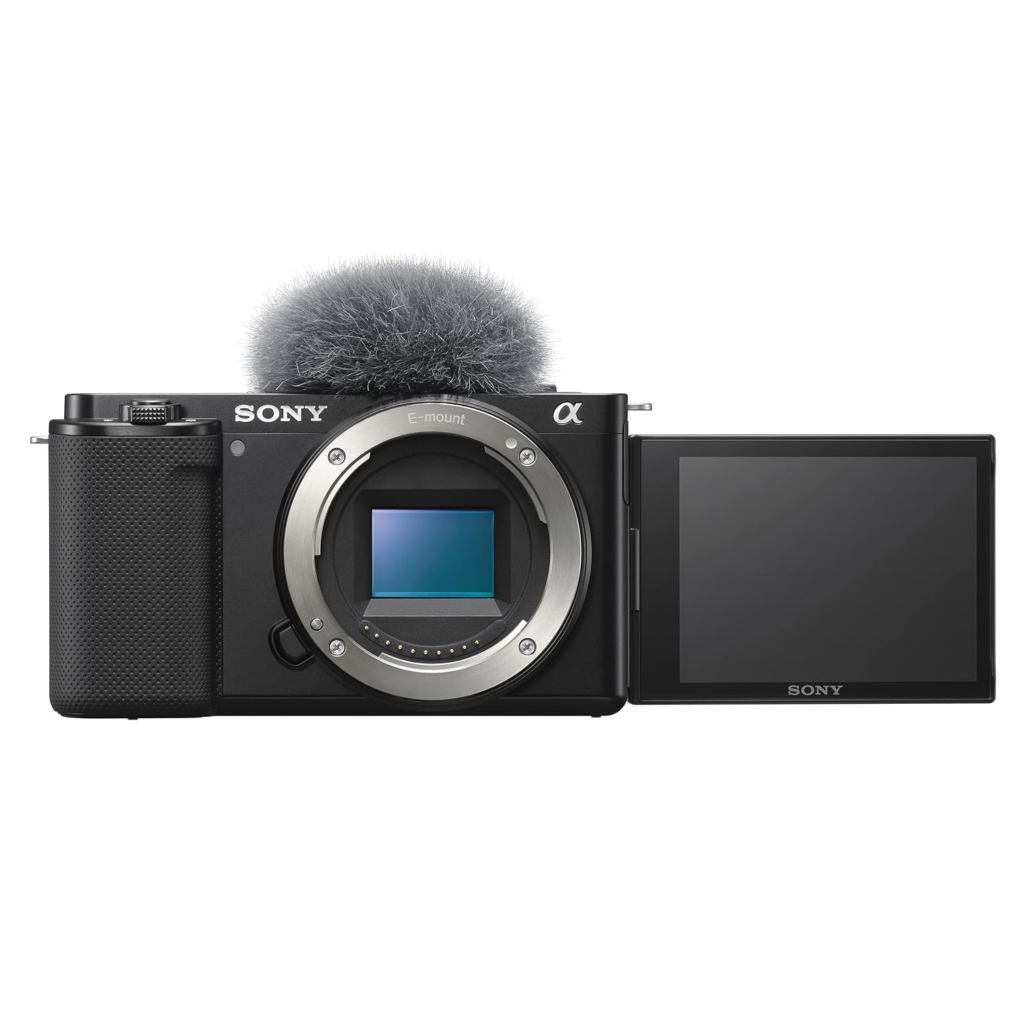
The original Sony ZV-E10 remains worth considering if you find it at an attractive discount.
It was designed specifically with content creators in mind, including a fully articulating display, creator-focused controls and strong autofocus.
Recent 2026 guides still recommend it as a budget creator camera, particularly when discounted.
Best For
New YouTubers, vloggers and creators who want interchangeable lenses without spending ZV-E10 II money.
Pros
- Excellent autofocus
- Flip-out display
- APS-C sensor
- Interchangeable lenses
- Creator-friendly controls
- Large lens ecosystem
Cons
- Older than ZV-E10 II
- Less advanced video capabilities
- No built-in viewfinder
- Stabilization is limited compared with gimbal cameras
Our Verdict: Buy it when the price difference versus the newer ZV-E10 II is substantial.
5. DJI Osmo Pocket 3 — Best Flip-Screen Camera for Travel YouTube Videos
⭐ Rating: 4.6/5
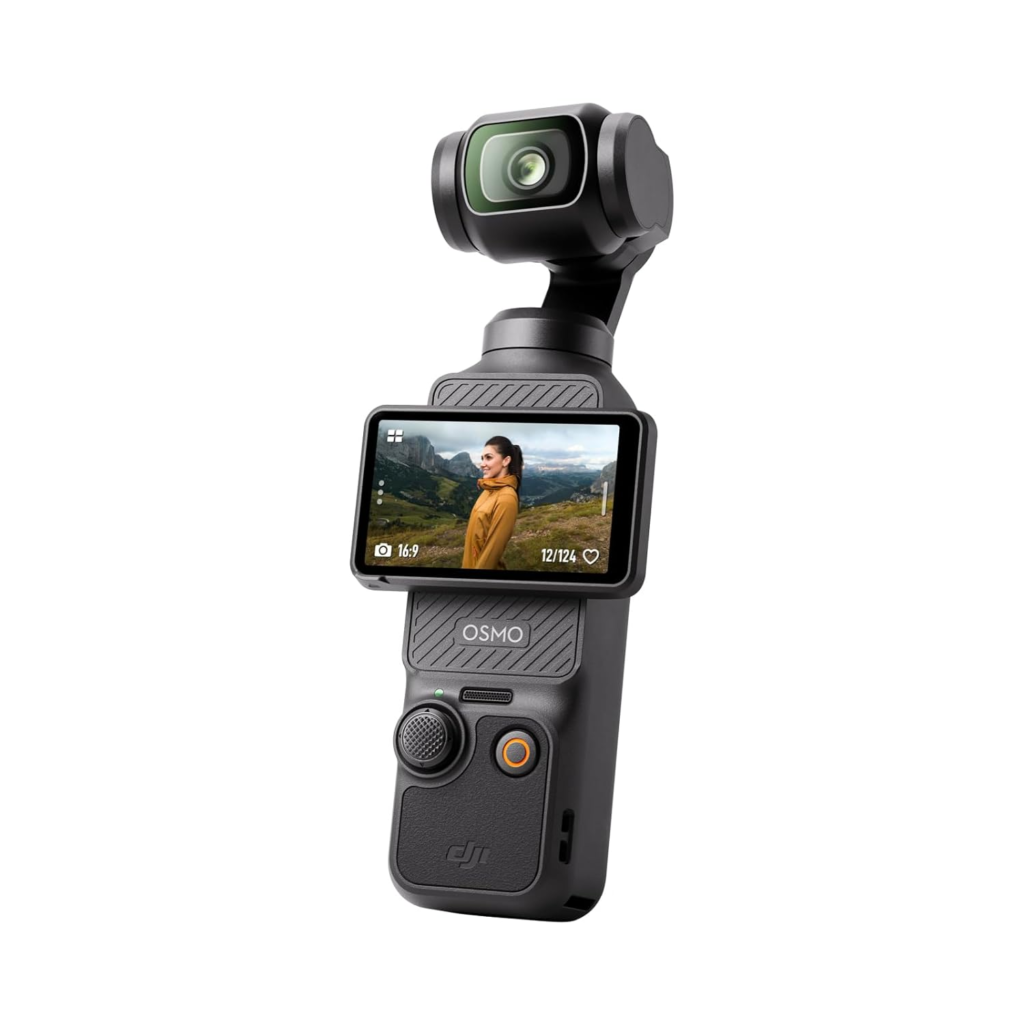
The DJI Osmo Pocket 3 is different from the interchangeable-lens cameras above.
Instead of a conventional flip-out screen, it uses a rotating touchscreen mounted on a compact three-axis gimbal.
That makes it particularly attractive for creators who record while walking.
Recent India guides place the Pocket 3 around the ₹40,000–₹55,000 range depending on the package.
Why It’s Great for YouTube
The integrated gimbal provides smooth footage without requiring you to carry a separate stabilizer.
It’s especially useful for:
- Travel vlogs
- Walking tours
- Food videos
- Street videos
- Family travel
- Behind-the-scenes content
- YouTube Shorts
Pros
- Extremely compact
- Built-in mechanical stabilization
- Rotating touchscreen
- Excellent for handheld video
- 1-inch sensor
- Easy to carry
- Quick setup
Cons
- Fixed lens
- Less flexible than interchangeable-lens cameras
- Not ideal for traditional studio photography
- Gimbal design requires more care
Our Verdict: If your YouTube channel is mainly travel and walking content, the Pocket 3 can be more practical than a larger mirrorless camera.
6. Sony ZV-E1 — Best Premium Flip-Screen Camera for YouTube
⭐ Rating: 4.8/5
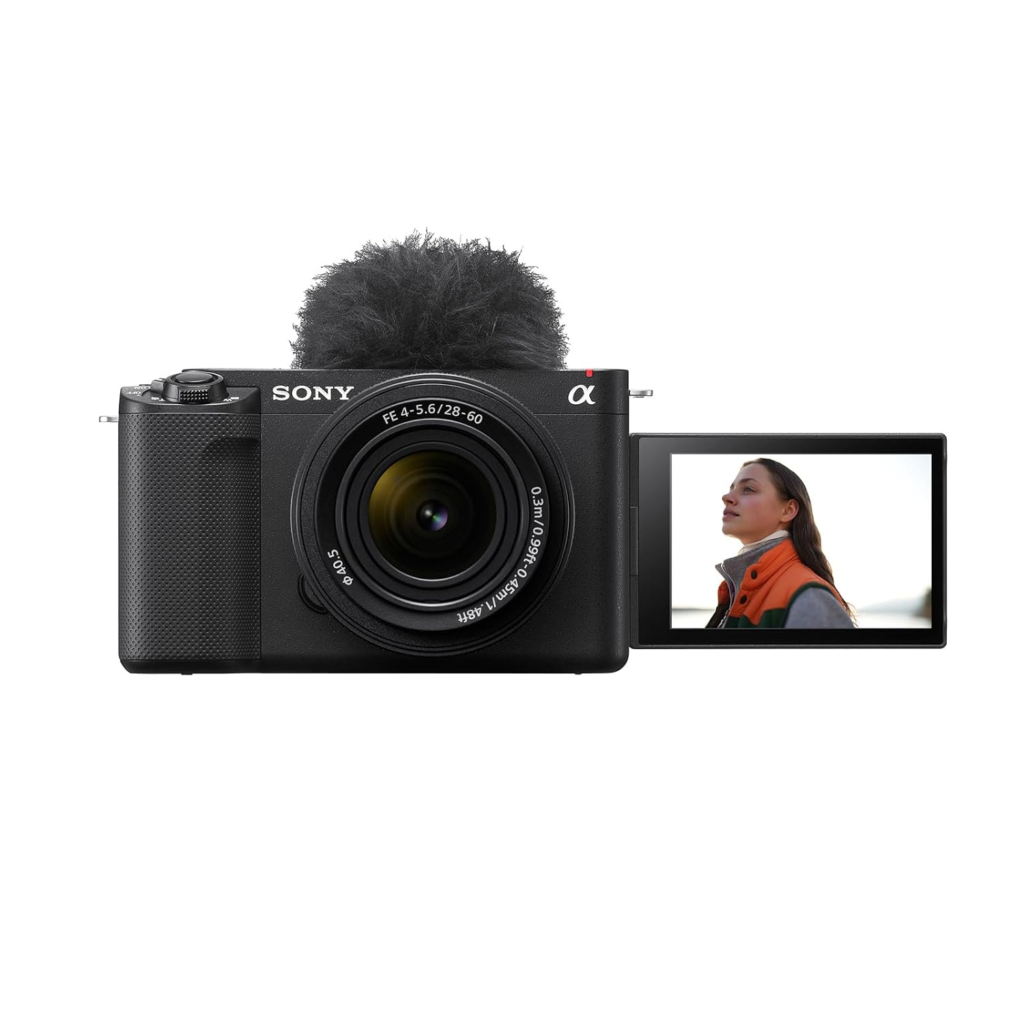
If you’re building a professional YouTube production setup and have a much larger budget, the Sony ZV-E1 moves into a completely different class.
Its full-frame sensor provides stronger low-light potential and a more cinematic look when paired with suitable lenses.
Recent India guides place it at around ₹1.8 lakh or more, making it a serious investment rather than a beginner camera.
Best For
- Professional YouTubers
- Commercial creators
- Cinematic channels
- Film-style talking-head videos
- Low-light creators
- Professional product videos
Pros
- Full-frame sensor
- Excellent autofocus
- Strong low-light performance
- Compact for a full-frame camera
- Fully articulating screen
- Excellent video features
Cons
- Expensive
- Lenses add considerably to the cost
- Overkill for beginners
Our Verdict: Fantastic for professional creators, but unnecessary if you’re just starting a YouTube channel.
Flip Screen vs Fixed Screen: Why Does It Matter?
A flip or articulating screen is particularly valuable when you record yourself.
With a conventional fixed screen, you may need an external monitor or rely on trial and error.
A front-facing screen lets you check:
Your framing → Face position → Focus → Exposure → Background → Product placement
This is particularly useful for one-person production.
A Flip Screen Is Most Useful For:
- Talking-head videos
- Vlogs
- Product reviews
- Makeup tutorials
- Cooking videos
- Fitness channels
- Educational videos
- Unboxing videos
- YouTube Shorts
Fully Articulating vs Tilting Screen
Not every “flip screen” works in exactly the same way.
Fully Articulating Screen
The display swings sideways and rotates toward you.
Best for: YouTubers and vloggers.
Tilting Screen
The display moves upward or downward but may not face you from all angles.
Best for: Photography and tripod-based shooting.
Rotating Screen
The screen rotates around a hinge or camera mechanism.
Best for: Compact vlogging cameras such as the DJI Osmo Pocket 3.
For a solo YouTuber, a fully articulating screen is generally the most flexible choice.
What Should You Look for in a YouTube Camera With a Flip Screen?
Buying based only on screen design is a mistake.
1. Autofocus
For solo creators, autofocus is extremely important.
Look for reliable face and eye detection so the camera can maintain focus while you move.
2. 4K Video
4K gives you more detail and allows additional flexibility when cropping footage.
However, don’t buy a camera simply because it says “4K.” Check frame rates, crop factors and recording limitations.
3. Microphone Input
Audio quality can make a bigger difference to perceived production quality than upgrading from one camera to another.
A camera with a microphone input gives you more flexibility.
4. Stabilization
If you mostly sit in front of a camera, stabilization isn’t a major priority.
If you walk and vlog, it becomes much more important.
This is why the DJI Pocket 3 is so attractive for travel creators.
5. Lens Options
Interchangeable-lens cameras let you change the look of your videos as your channel grows.
You can use:
- Wide-angle lenses for vlogging
- 24–35mm lenses for talking heads
- 50mm lenses for portraits
- Macro lenses for product details
- Telephoto lenses for distant subjects
6. Low-Light Performance
If you record indoors or at night, sensor size and lens aperture become important.
An APS-C or full-frame camera paired with a bright lens can provide a significant advantage.
Best Flip-Screen YouTube Cameras by Budget
| Budget in India | Best Choice | Ideal User |
|---|---|---|
| ₹40,000–₹55,000 | DJI Osmo Pocket 3 | Travel vloggers |
| ₹50,000–₹70,000 | Sony ZV-E10 | Budget creators |
| ₹60,000–₹70,000 | Canon EOS R50 | Beginners |
| ₹70,000–₹80,000 | Canon EOS R50 V | Video creators |
| ₹80,000–₹1.05 lakh | Sony ZV-E10 II | Serious YouTubers |
| ₹1.8 lakh+ | Sony ZV-E1 | Professional creators |
These are approximate market ranges rather than guaranteed live prices. Current 2026 India guides show similar price bands for these cameras.
Best Camera for Talking-Head YouTube Videos
For a traditional talking-head YouTube channel, I would shortlist:
🥇 Sony ZV-E10 II
Best combination of image quality, autofocus, lens flexibility and video features.
🥈 Canon EOS R50
Better suited to beginners who want simplicity and both photo/video capability.
🥉 Canon EOS R50 V
Excellent if your workflow is heavily video-oriented.
For a fixed studio setup, you don’t necessarily need a camera with advanced stabilization. Put more of your budget into a good lens, microphone and lighting.
Best Camera for YouTube Product Reviews
Product reviewers should prioritize:
- Autofocus
- Product-focused shooting modes
- Good close-up image quality
- Flip screen
- External microphone support
- Lens flexibility
The Sony ZV-E10 II and Canon EOS R50 V are particularly compelling for this type of content.
A camera with a flip screen also makes it much easier to check whether the product is positioned correctly while you’re recording alone.
Best Camera for YouTube Vlogging
For walking and travel content, the ranking changes.
Best Overall: DJI Osmo Pocket 3
The integrated gimbal is the biggest advantage.
Best Interchangeable-Lens Option: Sony ZV-E10 II
Choose this if you want more control over lenses and image style.
Best Budget Option: Sony ZV-E10
A discounted ZV-E10 can provide an affordable entry into Sony’s creator ecosystem.
Don’t Forget the Microphone
One of the biggest mistakes beginners make is spending their entire budget on the camera.
A ₹70,000 camera with poor audio can produce a less professional video than a ₹50,000 camera paired with a good microphone and lighting.
Your YouTube budget should ideally include:
- Camera
- Lens
- Microphone
- Tripod
- LED light
- Extra battery
- Memory card
For travel creators, add a compact mini tripod and spare batteries.
Recommended YouTube Camera Setup
For a beginner:
Camera: Canon EOS R50
Lens: Kit lens initially
Microphone: Compact wireless/shotgun microphone
Lighting: LED key light
Support: Tripod
For a serious creator:
Camera: Sony ZV-E10 II
Lens: Fast wide/standard lens
Microphone: Wireless microphone
Lighting: Soft LED key light
Support: Full-size tripod
For travel:
Camera: DJI Osmo Pocket 3
Microphone: Wireless microphone
Support: Mini tripod
Common Mistakes When Buying a YouTube Camera
Buying the Most Expensive Camera
More expensive doesn’t automatically mean better for your channel.
A camera that is too large or complicated may stay at home.
Ignoring Audio
Viewers are much more forgiving of slightly imperfect video than unintelligible audio.
Choosing Based Only on Megapixels
YouTube is a video platform. Sensor size, autofocus, video formats, stabilization and audio matter more than still-photo megapixels.
Forgetting the Lens
A camera body is only part of a mirrorless setup.
Budget for a lens that suits your filming style.
Not Considering Your Shooting Style
The best camera for a studio creator may be completely different from the best camera for a travel vlogger.
Frequently Asked Questions
What is the best camera for YouTube videos with a flip screen?
The Sony ZV-E10 II is one of the best overall choices for serious YouTube creators because it combines an APS-C sensor, fully articulating display, strong autofocus, 4K video and interchangeable lenses.
What is the best budget flip-screen camera for YouTube?
The Sony ZV-E10 and Canon EOS R50 are strong options to consider when shopping at a lower price than the ZV-E10 II.
Is a flip screen important for YouTube?
Yes, especially if you record yourself without another person operating the camera. It lets you monitor framing, focus and positioning while filming.
Is Canon EOS R50 good for YouTube?
Yes. Its fully articulating screen, strong autofocus, APS-C sensor and compact design make it a particularly good beginner YouTube camera.
Is Sony ZV-E10 II good for YouTube?
Yes. It is particularly well suited to serious YouTubers, reviewers, educators and vloggers who want interchangeable lenses and advanced video capabilities.
Is DJI Osmo Pocket 3 good for YouTube?
Yes. Its compact design, rotating screen and mechanical gimbal make it especially useful for travel vlogs and handheld walking videos.
Do I need a 4K camera for YouTube?
Not necessarily. A good 1080p camera can still produce excellent YouTube videos. However, 4K gives you more detail and additional flexibility when editing.
Which is better for YouTube: Sony or Canon?
Both are excellent. Sony is particularly attractive for creators who want a large lens ecosystem and advanced video features, while Canon is often praised for beginner-friendly operation and autofocus.
Should beginners buy an expensive camera for YouTube?
Usually not. Beginners should spend enough to get reliable autofocus, good video quality and a flip screen, then allocate some budget toward audio and lighting.
Final Verdict: Which Flip-Screen YouTube Camera Should You Buy?
There isn’t one perfect camera for every YouTuber.
🏆 Best Overall
Sony ZV-E10 II — ⭐ 4.8/5
Best combination of video quality, autofocus, flip screen, lens flexibility and room to grow.
💰 Best for Beginners
Canon EOS R50 — ⭐ 4.7/5
An approachable option for new creators who want both photography and video capabilities.
🎥 Best for Video Creators
Canon EOS R50 V — ⭐ 4.7/5
A compelling choice for creators who spend most of their time recording video.
🎒 Best for Travel Vlogging
DJI Osmo Pocket 3 — ⭐ 4.6/5
Its integrated gimbal makes handheld travel footage exceptionally convenient.
💵 Best Budget Sony
Sony ZV-E10 — ⭐ 4.5/5
Still worth considering when available at a substantial discount.
🎬 Best Premium Option
Sony ZV-E1 — ⭐ 4.8/5
For creators who want full-frame video and are willing to spend significantly more.
The most important takeaway is simple: buy the camera that fits the way you actually create videos. A compact camera that you carry everywhere can be more valuable than an expensive setup that stays in a cupboard.
And if you’re just starting, don’t forget to leave some of your budget for a good microphone and lighting. Those two upgrades can transform the quality of your YouTube videos just as much as the camera itself.