Water Flosser for Teeth
Introduction
Maintaining proper oral hygiene goes beyond brushing your teeth twice a day. Traditional flossing can be time-consuming and uncomfortable for many people. That’s where a water flosser for teeth comes in—a modern, effective solution designed to remove plaque, debris, and bacteria using a targeted stream of water.
In this comprehensive guide, you’ll discover how water flossers work, their benefits, and how to choose the best one for your dental care routine.
What Is a Water Flosser?
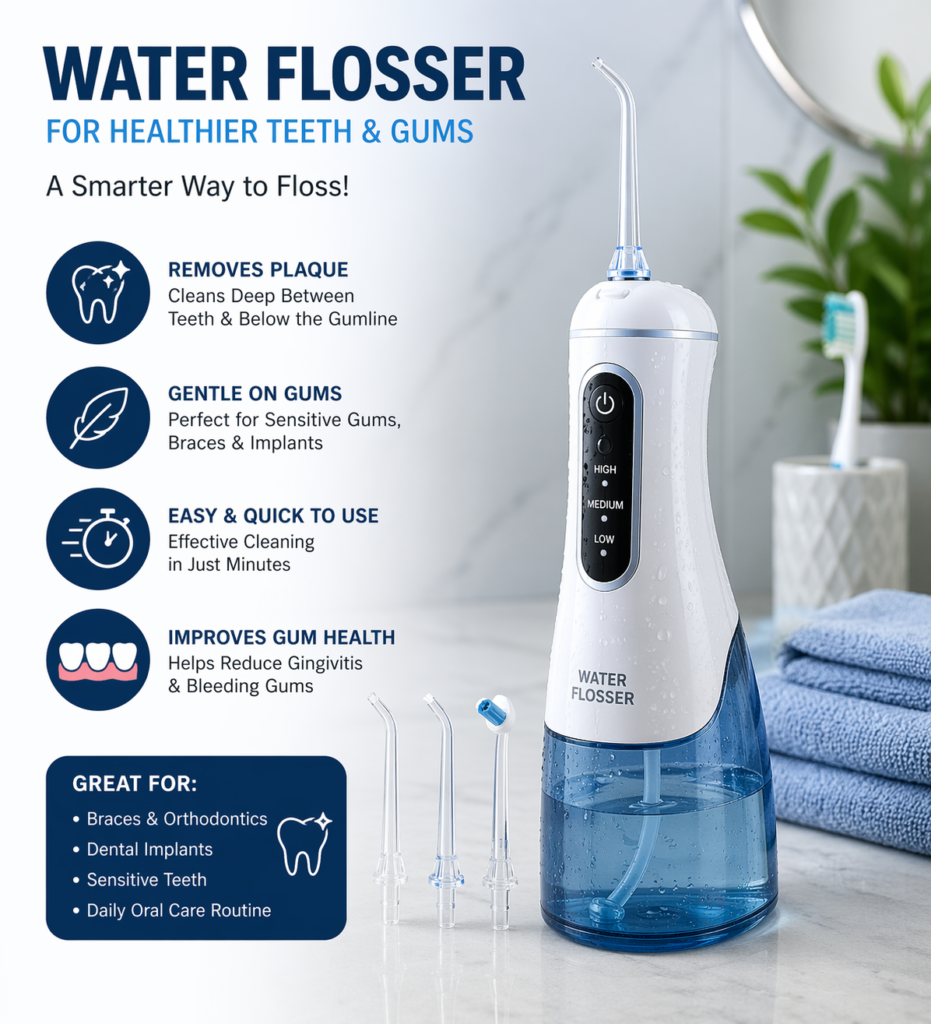
A water flosser, also known as an oral irrigator, is a dental device that uses pulsating water pressure to clean between teeth and along the gumline. It is an excellent alternative or supplement to traditional string floss.
Benefits of Using a Water Flosser
1. Superior Plaque Removal
Water flossers can effectively remove plaque and food particles from hard-to-reach areas.
2. Gentle on Gums
Ideal for people with sensitive gums, braces, or dental implants.
3. Easy to Use
Perfect for beginners or those who find traditional flossing difficult.
4. Improves Gum Health
Regular use helps reduce gingivitis and bleeding gums.
5. Time-Saving
Quick and efficient cleaning in just a few minutes.
Types of Water Flossers
1. Countertop Water Flossers
- Larger units with a water reservoir
- More powerful and customizable pressure settings
- Ideal for home use
2. Cordless Water Flossers
- Portable and battery-operated
- Great for travel and small bathrooms
3. Faucet-Attached Flossers
- Connect directly to your tap
- No need for electricity or batteries
Key Features to Look For
1. Adjustable Pressure Settings
Allows customization for comfort and effectiveness.
2. Water Tank Capacity
Larger tanks reduce the need for frequent refilling.
3. Multiple Tips
Useful for braces, implants, and periodontal pockets.
4. Battery Life
Important for cordless models.
5. Ease of Cleaning
Removable parts make maintenance easier.
How to Use a Water Flosser Properly
- Fill the reservoir with lukewarm water
- Select the appropriate pressure setting
- Lean over the sink to avoid splashing
- Aim the tip at the gumline
- Glide along each tooth, pausing briefly between teeth
- Empty and clean the device after use
Water Flosser vs. Traditional Floss
| Feature | Water Flosser | Traditional Floss |
|---|---|---|
| Ease of Use | Very easy | Requires technique |
| Gum Comfort | Gentle | Can cause irritation |
| Effectiveness | Excellent for gums | Great for tight spaces |
| Convenience | Quick | Time-consuming |
Who Should Use a Water Flosser?
- People with braces or orthodontic appliances
- Individuals with dental implants or crowns
- Those with sensitive gums or bleeding issues
- Anyone looking for a more convenient flossing method
Tips for Best Results
- Use daily for optimal oral hygiene
- Combine with regular brushing
- Replace tips periodically
- Use dentist-recommended pressure settings
Conclusion
A water flosser for teeth is a powerful addition to your oral care routine. It offers convenience, comfort, and effective cleaning—making it an excellent choice for maintaining healthy teeth and gums. Whether you’re dealing with braces or simply want a better flossing experience, investing in a quality water flosser can significantly improve your dental health.