Hydrogen Gas Stove
As the world shifts toward sustainable living, the concept of a hydrogen Gas stove is gaining attention as a revolutionary alternative to traditional gas and electric cooking systems. With zero carbon emissions and high efficiency, hydrogen-powered cooking could redefine kitchens in the coming years. In this guide, we explore how hydrogen stoves work, their benefits, challenges, and whether they are a practical choice for modern homes.
What is a Hydrogen Gas Stove?
A hydrogen stove is a cooking appliance that uses hydrogen gas (H₂) as its primary fuel source instead of LPG, natural gas, or electricity. When hydrogen burns, it reacts with oxygen to produce heat and water vapor—without releasing harmful carbon emissions.
Simple Reaction:
Hydrogen + Oxygen → Heat + Water (H₂O)
This makes hydrogen one of the cleanest fuels available for domestic use.
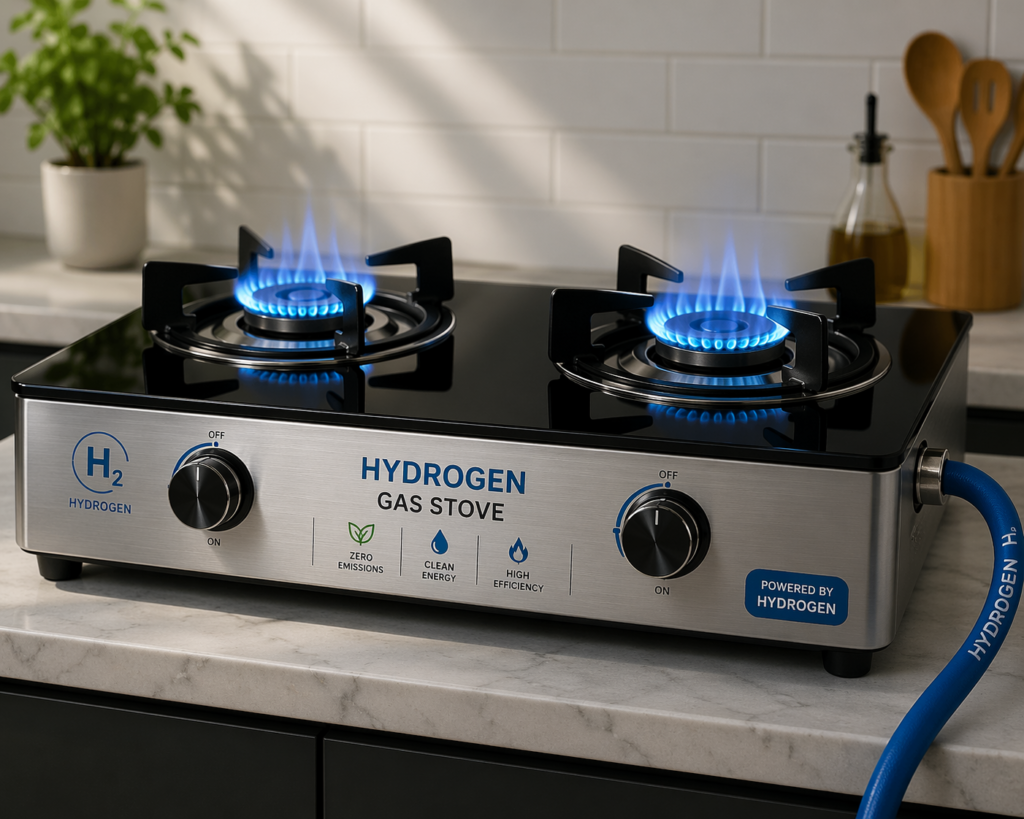
How Does a Hydrogen Gas Stove Work?
Hydrogen stoves operate similarly to traditional gas stoves but with a few key differences:
- Hydrogen gas is supplied through a dedicated pipeline or storage tank
- Special burners are designed to handle hydrogen’s unique flame properties
- Ignition produces a clean, nearly invisible flame
- Heat is generated instantly for efficient cooking
Advanced models may include safety sensors to detect leaks and regulate gas flow.
Key Benefits of Hydrogen Gas Stoves
1. Zero Carbon Emissions
Unlike LPG or natural gas, hydrogen combustion produces no CO₂, helping reduce your household’s carbon footprint.
2. Clean and Eco-Friendly
The only byproduct is water vapor, making it environmentally safe and ideal for sustainable homes.
3. High Energy Efficiency
Hydrogen burns at a high temperature, allowing faster cooking times and better heat control.
4. Future-Ready Technology
As governments and industries invest in green hydrogen, adopting hydrogen appliances aligns with future energy trends.
5. Reduced Indoor Pollution
No harmful smoke or pollutants improves indoor air quality, especially important in enclosed kitchens.
Challenges of Hydrogen Gas Stoves
While promising, hydrogen stoves still face some limitations:
1. Limited Availability
Hydrogen infrastructure is still developing, especially in residential areas.
2. Higher Initial Cost
Hydrogen stoves and storage systems are currently more expensive than conventional options.
3. Storage and Safety
Hydrogen is highly flammable and requires proper storage solutions and safety measures.
4. Invisible Flame
Hydrogen flames are less visible, which can pose safety risks without proper indicators.
Hydrogen Gas Stove vs Traditional Gas Stove
| Feature | Hydrogen Gas Stove | LPG Gas Stove |
|---|---|---|
| Emissions | Zero CO₂ | High CO₂ |
| Fuel Source | Hydrogen | LPG/Natural Gas |
| Efficiency | High | Moderate |
| Cost | High (initial) | Affordable |
| Environmental Impact | Very Low | High |
Are Hydrogen Stoves Available in India?
Hydrogen stoves are still in the early adoption phase in India, but pilot projects and research initiatives are underway. With India’s growing focus on green hydrogen under national energy missions, we can expect gradual availability in the coming years.
Who Should Consider a Hydrogen Gas Stove?
A hydrogen stove may be ideal for:
- Eco-conscious homeowners
- Early adopters of clean technology
- Smart home enthusiasts
- Off-grid or renewable energy users
The Future of Hydrogen Cooking
Hydrogen is expected to play a major role in the global energy transition. As production costs decrease and infrastructure improves, hydrogen stoves could become a mainstream kitchen appliance.
Experts predict that within the next decade, hydrogen-based cooking solutions will be more accessible, affordable, and widely adopted.
Final Thoughts
Hydrogen stoves represent a bold step toward clean, sustainable cooking. While they are not yet widely available, their environmental benefits and efficiency make them a promising alternative to traditional cooking fuels.
If you’re planning a future-ready kitchen, keeping an eye on hydrogen stove technology could be a smart move.