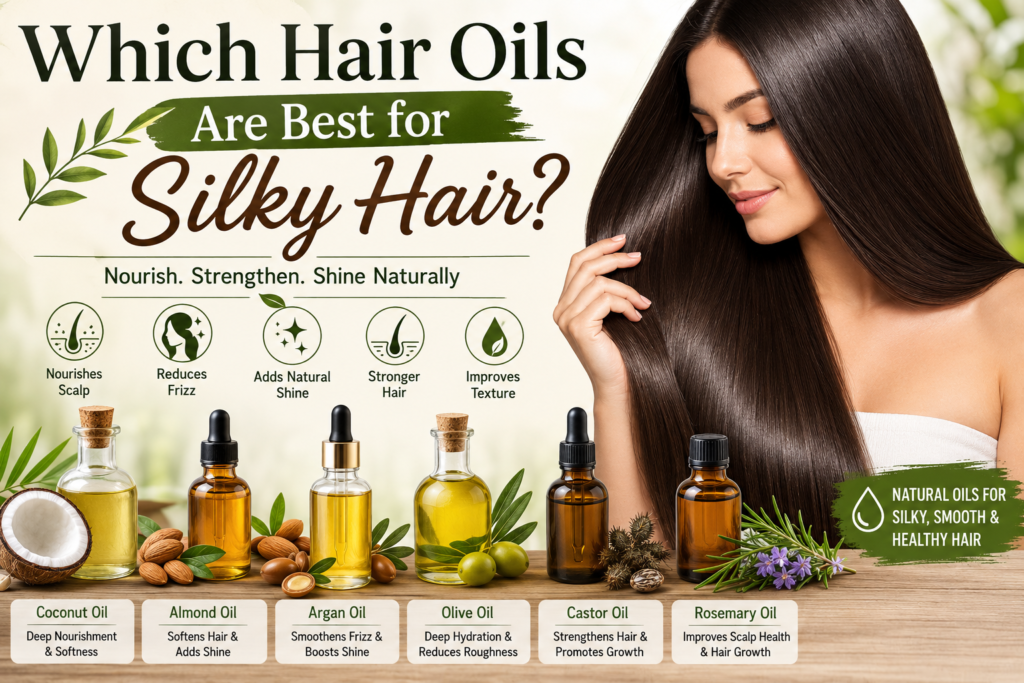
Dreaming of silky, smooth, and shiny hair? You’re not alone. While shampoos, conditioners, and serums play an important role in hair care, the secret to naturally silky hair often begins with a good hair oil. Hair oils nourish the scalp, strengthen hair strands, reduce frizz, and lock in moisture, helping your hair look healthier and feel softer.
Whether you have dry, damaged, curly, or frizzy hair, choosing the right oil can transform your hair care routine. In this guide, we’ll explore the best hair oils for silky hair, their benefits, and how to use them for maximum results.
Why Hair Oiling Is Important for Silky Hair
Hair oiling has been a trusted beauty ritual for centuries. Regular oiling offers several benefits:
- Deeply nourishes hair roots
- Reduces dryness and split ends
- Controls frizz and flyaways
- Improves hair texture
- Adds natural shine
- Strengthens hair follicles
- Protects against environmental damage
The key is selecting the right oil based on your hair type and concerns.
Best Hair Oils for Silky Hair
1. Coconut Oil
Best For: Dry, damaged, and frizzy hair
Coconut oil is one of the most popular and effective hair oils. It penetrates deep into the hair shaft and helps prevent protein loss, making hair softer and stronger.
Benefits:
- Deep conditioning
- Reduces hair breakage
- Adds natural shine
- Controls frizz
- Improves hair smoothness
How to Use:
Warm the oil slightly and massage it into your scalp and hair. Leave it overnight or for at least one hour before washing.
2. Argan Oil
Best For: Frizzy and dull hair
Often called “liquid gold,” argan oil is packed with antioxidants, fatty acids, and Vitamin E that help restore softness and shine.
Benefits:
- Instantly smoothens hair
- Tames frizz
- Adds glossy shine
- Lightweight and non-greasy
- Protects against heat damage
How to Use:
Apply a few drops to damp hair after washing or use as a pre-wash treatment.
3. Almond Oil
Best For: Normal to dry hair
Almond oil is rich in vitamins E, A, and D. It nourishes the hair and helps maintain a silky texture without weighing it down.
Benefits:
- Softens hair naturally
- Reduces dryness
- Improves hair elasticity
- Makes hair easier to manage
How to Use:
Massage into the scalp twice a week and leave on for several hours before shampooing.
4. Olive Oil
Best For: Thick, coarse hair
Olive oil acts as a natural conditioner and helps lock moisture into hair strands.
Benefits:
- Deep hydration
- Reduces roughness
- Prevents split ends
- Enhances shine
How to Use:
Apply from mid-lengths to ends and leave for 30–60 minutes before washing.
5. Jojoba Oil
Best For: Oily scalp and fine hair
Jojoba oil closely resembles the natural oils produced by the scalp, making it an excellent lightweight moisturizer.
Benefits:
- Balances scalp oil production
- Hydrates hair without greasiness
- Improves softness
- Reduces dryness and itchiness
How to Use:
Use a small amount as a scalp massage oil or mix with your regular hair oil.
6. Castor Oil
Best For: Hair growth and thickness
Castor oil is rich in ricinoleic acid and nutrients that nourish the scalp and strengthen hair strands.
Benefits:
- Promotes healthy hair growth
- Reduces breakage
- Adds thickness
- Improves overall hair texture
How to Use:
Mix with coconut or almond oil for easier application.
7. Rosemary Oil
Best For: Hair growth and scalp health
Rosemary oil has become increasingly popular for its potential hair growth benefits and ability to improve scalp circulation.
Benefits:
- Supports healthier hair growth
- Strengthens roots
- Improves scalp health
- Helps maintain smooth hair texture
How to Use:
Always dilute rosemary essential oil with a carrier oil before applying.
Best Hair Oil According to Hair Type
| Hair Type | Recommended Oil |
|---|---|
| Dry Hair | Coconut Oil, Olive Oil |
| Frizzy Hair | Argan Oil, Coconut Oil |
| Fine Hair | Jojoba Oil |
| Damaged Hair | Argan Oil, Almond Oil |
| Curly Hair | Coconut Oil, Castor Oil |
| Oily Scalp | Jojoba Oil |
| Hair Growth Focus | Rosemary Oil, Castor Oil |
Tips for Making Hair More Silky Naturally
Along with regular oiling, follow these tips:
Use a Mild Shampoo
Avoid harsh shampoos that strip natural oils from your hair.
Don’t Overwash
Washing hair too frequently can lead to dryness and frizz.
Deep Condition Weekly
A nourishing hair mask can enhance softness and shine.
Protect Hair from Heat
Limit excessive use of straighteners, curling irons, and blow dryers.
Eat a Balanced Diet
Include foods rich in protein, omega-3 fatty acids, biotin, and vitamins.
Stay Hydrated
Proper hydration contributes to healthier hair texture.
Common Mistakes to Avoid
- Applying too much oil
- Using very hot oil on the scalp
- Leaving oil on for several days
- Skipping shampoo after oiling
- Choosing oils unsuitable for your hair type
Frequently Asked Questions
Which oil makes hair silky instantly?
Argan oil is often considered one of the best oils for instantly smoother and shinier hair.
Can coconut oil make hair silky?
Yes. Coconut oil deeply nourishes the hair shaft and helps reduce dryness and frizz, resulting in softer hair.
How often should I oil my hair?
Most people benefit from oiling their hair 1–2 times per week.
Is overnight oiling necessary?
Not always. Leaving oil on for 1–3 hours can also provide excellent results.
Which oil is best for frizzy hair?
Argan oil and coconut oil are among the best choices for controlling frizz and improving smoothness.
Conclusion
Achieving silky, healthy hair doesn’t require expensive salon treatments. The right hair oil can nourish your scalp, repair damage, reduce frizz, and add a beautiful natural shine. Coconut oil remains a timeless favorite, while argan oil offers premium smoothing benefits for modern hair care routines.
Choose an oil that matches your hair type, maintain a consistent hair care routine, and you’ll be well on your way to softer, shinier, and more manageable hair.