💧 How Waterproof Bags Work – Explained Simply
Ever wondered how a waterproof bag keeps your belongings dry—even in heavy rain or accidental water exposure?
It’s not magic. It’s smart design.
In this simple guide, you’ll learn how waterproof bags actually work, what makes them effective, and how to choose one that truly protects your gear.
🧠 The Basic Idea: Blocking Water Entry
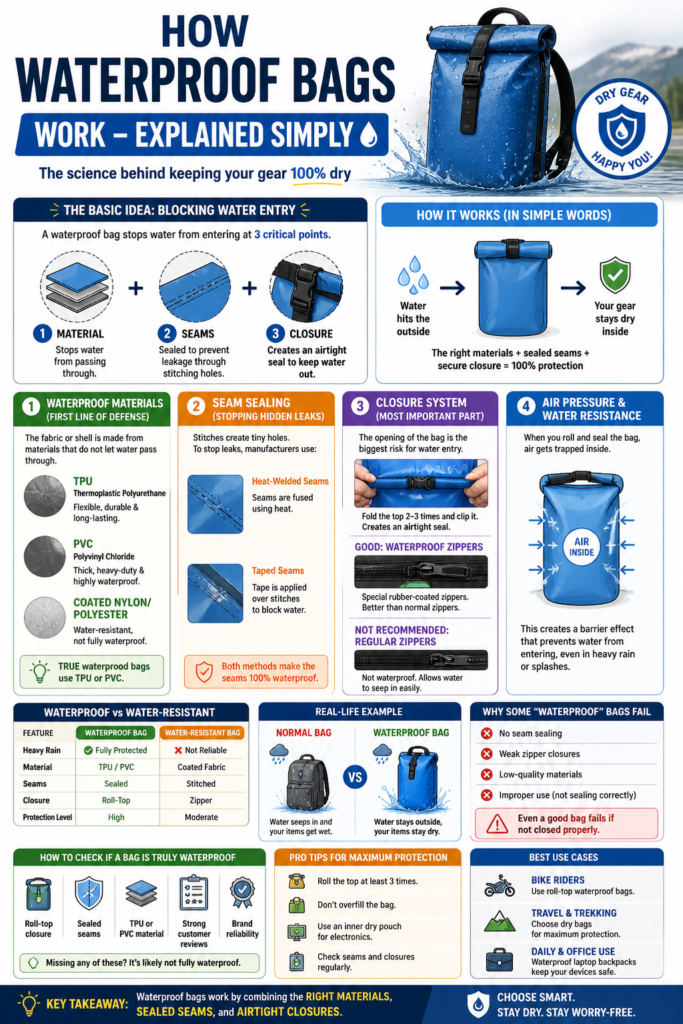
A waterproof bag works by stopping water from entering at every possible point:
- Through the material
- Through the seams
- Through the opening (closure)
👉 If any one of these fails, the bag is no longer waterproof.
🧱 1. Waterproof Materials (First Line of Defense)
The outer layer of a waterproof bag is made from materials that don’t let water pass through.
Common Materials:
- TPU (Thermoplastic Polyurethane) → Flexible, durable, long-lasting
- PVC (Polyvinyl Chloride) → Thick, heavy-duty, highly waterproof
- Coated Nylon/Polyester → Water-resistant, not fully waterproof
👉 True waterproof bags use TPU or PVC, not just coated fabric.
🔥 2. Seam Sealing (Stopping Hidden Leaks)
Even if the fabric is waterproof, needle holes from stitching can let water in.
So manufacturers use:
- Heat-welded seams
- Taped seams
👉 These methods seal the tiny holes, making the bag fully waterproof.
🔒 3. Closure System (Most Important Part)
The opening of the bag is the biggest risk for water entry.
Types of Closures:
✅ Roll-Top Closure (Best)
- You fold the top 2–3 times and clip it
- Creates an airtight seal
👉 This is why dry bags use roll-top design.
⚠️ Waterproof Zippers
- Special rubber-coated zippers
- Good but still slightly vulnerable
❌ Regular Zippers
- Not waterproof
- Allow water to seep in easily
🌊 4. Air Pressure & Water Resistance
When you roll and seal a waterproof bag:
- Air gets trapped inside
- Water cannot enter easily
👉 This creates a barrier effect, especially useful in heavy rain or splashes.
🧪 Real-Life Example
Imagine this:
- A normal bag in rain → water slowly seeps in
- A waterproof bag → water stays outside completely
👉 Even if the bag is splashed or briefly dropped in water, your items stay dry (if sealed properly).
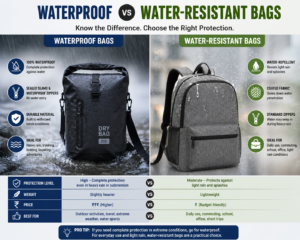
⚖️ Waterproof vs Water-Resistant (Simple Difference)
| Feature | Waterproof Bag | Water-Resistant Bag |
|---|---|---|
| Heavy Rain | ✅ Fully protected | ❌ Not reliable |
| Material | TPU/PVC | Coated fabric |
| Seams | Sealed | Stitched |
| Closure | Roll-top | Zipper |
👉 Most confusion comes from this difference.
❗ Why Some “Waterproof” Bags Fail
Not all bags labeled waterproof actually work.
Common reasons:
- No seam sealing
- Weak zipper closures
- Low-quality materials
- Improper use (not sealing correctly)
👉 Even a good bag fails if not closed properly.
🧠 How to Check If a Bag is Truly Waterproof
Before buying, look for:
- ✔ Roll-top closure
- ✔ Sealed seams
- ✔ TPU or PVC material
- ✔ Strong customer reviews
- ✔ Brand reliability
👉 Missing any of these? It’s likely not fully waterproof.
💡 Pro Tips for Maximum Protection
- Always roll the top at least 3 times
- Don’t overfill (affects sealing)
- Use inner dry pouch for electronics
- Check seams regularly
🏍️ Bonus Tip for Indian Conditions
During monsoon or bike riding:
- Choose roll-top waterproof bags
- Avoid zipper-only designs
- Clean and dry regularly
👉 Indian weather demands real waterproofing, not just marketing.
🔑 Conclusion
So, how do waterproof bags work?
👉 They combine:
- Waterproof materials
- Sealed seams
- Airtight closure
💯 When all three work together, your bag becomes truly waterproof.
👉 If even one fails, water gets in.