
An air fryer can turn ordinary ingredients into crispy fries, crunchy vegetables, golden chicken, and delicious snacks with much less oil than traditional deep frying. However, getting that satisfying crunch every time isn’t always easy. Sometimes the food comes out soft instead of crispy, the coating becomes soggy, or the outside browns before the inside is fully cooked.
The secret to making crispy food in an air fryer lies in a few simple techniques: controlling moisture, using the right amount of oil, leaving enough space for hot air to circulate, and choosing the correct cooking temperature. These details can make a noticeable difference in your results.
Whether you’re preparing homemade French fries, frozen snacks, crispy paneer, roasted vegetables, or chicken wings, this guide explains how to make food crispy in an air fryer without unnecessary oil. You’ll also learn which mistakes to avoid, how to adjust cooking times, and how to keep your favourite foods crunchy after cooking.
Why Does an Air Fryer Make Food Crispy?
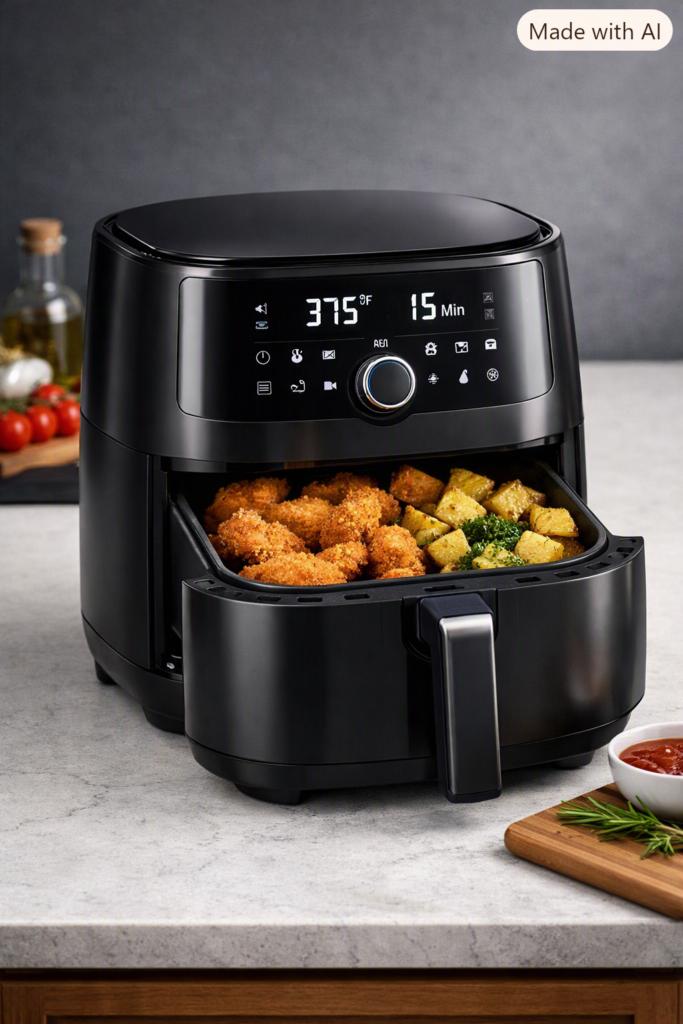
An air fryer uses a heating element and a fan to circulate hot air around food. This process cooks the surface and helps moisture evaporate, allowing the exterior to develop a browned, crisp texture.
Unlike deep frying, which cooks food in hot oil, air frying generally requires only a small amount of oil, depending on the recipe. However, crispiness still depends on the ingredients, their moisture content, the coating, the temperature, and the airflow inside the basket.
For example, thin potato strips can become crisp when excess moisture is removed and the pieces are spread out properly. On the other hand, wet batter may drip through the basket or remain soft because it doesn’t form a suitable coating in the circulating air.
Understanding these differences helps you choose the right technique for each type of food.
10 Best Tips for Making Crispy Food in an Air Fryer
1. Preheat Your Air Fryer When Needed
Preheating helps the cooking chamber reach the desired temperature before you add your ingredients. This can improve browning and help certain foods develop a crisp exterior.
For many recipes, preheating for around 3–5 minutes is a useful starting point, but the correct time depends on your appliance and the manufacturer’s instructions.
Preheating is particularly helpful for:
- Homemade French fries
- Breaded chicken
- Frozen snacks
- Crispy potato wedges
- Foods that benefit from quick surface browning
Some air fryers heat up quickly or have an automatic preheat function. Follow the appliance instructions and the recipe rather than assuming every dish needs the same preheating time.
2. Remove Excess Moisture Before Cooking
Moisture is one of the biggest reasons food turns out soggy instead of crispy.
When the surface of an ingredient is wet, the heat must first evaporate that moisture before effective browning can occur. As a result, the food may cook without developing the crunch you’re looking for.
Before placing food in the air fryer:
- Pat washed vegetables dry with a clean kitchen towel.
- Dry potato strips after soaking them in water.
- Remove excess moisture from tofu or paneer when appropriate for the recipe.
- Pat chicken skin dry before seasoning.
- Drain marinated ingredients thoroughly instead of pouring excess marinade into the basket.
For homemade fries, drying the potatoes thoroughly after soaking can make a noticeable difference to the final texture.
Pro tip: Use a clean paper towel or kitchen towel to absorb surface moisture before adding oil or seasoning.
3. Avoid Overcrowding the Basket
Even though an air fryer cooks with circulating hot air, that air needs room to move around the food.
If you fill the basket with too many ingredients, the pieces may overlap and block airflow. This can result in uneven cooking, pale surfaces, and soft patches.
For better results:
- Arrange food in a single layer whenever practical.
- Leave small gaps between pieces.
- Cook large batches in multiple rounds.
- Use a suitable rack only if your appliance supports it and airflow remains adequate.
This technique is especially important for French fries, chicken nuggets, potato wedges, and breaded vegetables.
Cooking a smaller batch may take a little longer overall, but it often produces crispier results than trying to cook everything at once.
4. Use the Right Amount of Oil
Air fryers need less oil than deep fryers, but some foods still benefit from a light coating.
A small amount of oil can help promote browning, improve the texture of potatoes, and encourage seasonings to stick to the surface.
Try these guidelines:
- Toss homemade potato fries with a light coating of oil.
- Brush or lightly spray vegetables before cooking.
- Apply a thin layer of oil to suitable breaded foods when the recipe calls for it.
- Avoid adding excessive oil, which can make food greasy and cause residue to accumulate.
For many recipes, approximately 1–2 teaspoons of oil for a small batch of vegetables or potatoes can be a reasonable starting point. Adjust according to the quantity and recipe.
Use an oil sprayer or brush that distributes oil evenly. Avoid aerosol sprays that the appliance manufacturer warns may damage the non-stick coating.
You generally don’t need to coat already-oily frozen snacks with additional oil unless their packaging or recipe recommends it.
5. Choose the Correct Cooking Temperature
Temperature plays a major role in the final texture. Cooking at too low a temperature may leave food soft, while excessive heat can brown the outside before the centre cooks properly.
The best temperature depends on the food, its size, whether it’s fresh or frozen, and your particular air fryer.
Here are useful starting ranges for common foods:
| Food | Suggested temperature | Approximate cooking time |
|---|---|---|
| Homemade French fries | 180–200°C | 15–25 minutes |
| Potato wedges | 190–200°C | 18–25 minutes |
| Frozen French fries | 180–200°C | 10–20 minutes |
| Chicken wings | 180–200°C | 20–30 minutes |
| Roasted vegetables | 180–200°C | 10–20 minutes |
| Breaded paneer pieces | 180–200°C | 8–15 minutes |
| Breaded chicken pieces | 180–200°C | 10–20 minutes |
These are general estimates, not guaranteed cooking times. Food thickness, batch size, appliance design, and starting temperature can change the results. Follow package instructions where available and verify that meat reaches a safe internal temperature.
For thicker foods, starting at a moderate temperature and finishing with a short period at a higher temperature may help balance thorough cooking with surface crispiness. Monitor the food closely to prevent burning.
6. Shake the Basket or Turn Food During Cooking
Air circulation is not always perfectly uniform, especially when food is arranged in several layers or has irregular shapes.
Shaking the basket or turning the pieces halfway through cooking helps expose different surfaces to the hot air.
This works particularly well for:
- French fries
- Potato wedges
- Frozen nuggets
- Cauliflower florets
- Small vegetable pieces
- Bite-sized snacks
For delicate breaded foods, use silicone-tipped tongs or a suitable spatula instead of shaking aggressively. This helps keep the coating intact.
You don’t need to open the basket constantly. Check the food at an appropriate point during cooking and turn it when needed.
7. Use a Suitable Coating for Extra Crunch
A good coating can make a major difference when preparing crispy chicken, paneer, vegetables, or homemade snacks.
Depending on the recipe, suitable options include:
- Cornflour or cornstarch: Helps create a light, crisp coating on suitable ingredients.
- Breadcrumbs: Useful for a crunchy exterior on breaded foods.
- Panko breadcrumbs: Their larger, airy flakes can create a crisp texture.
- Seasoned flour: Adds flavour and helps create a coating for some recipes.
- Crushed cereal or crackers: Can provide crunch when used in an appropriate recipe.
For breaded foods, follow a consistent coating process. Dry the ingredient, coat it with flour if required, dip it in an appropriate binding mixture, and finish with breadcrumbs.
Press the coating gently onto the surface so it adheres. A light oil coating can improve browning.
Avoid pouring loose flour or dry coating mixtures into the air fryer without attaching them to food. The fan may blow loose particles around, potentially bringing them into contact with the heating element.
8. Avoid Wet Batter for Traditional Deep-Fried Results
Traditional liquid batter is designed to cook while surrounded by hot oil. In an air fryer, loose batter may drip through the basket before it sets.
If you want crispy food without deep frying, use a coating that adheres to the ingredient and can withstand circulating hot air.
For example, instead of dipping vegetables in a thin liquid batter, try a flour-based coating or breadcrumbs with a suitable binding layer.
For Indian snacks such as paneer bites, cauliflower, or potato cutlets, a well-adhered coating can help create a crisp exterior. Recipes that rely on thick wet batter may need to be adapted specifically for air frying.
9. Avoid Covering the Basket With Solid Liners
Air fryers rely on airflow to cook food evenly. A liner that blocks too much of the basket’s perforated surface can interfere with circulation and reduce crispiness.
If you use parchment liners or silicone accessories:
- Choose products designed for your air fryer and cooking temperature.
- Use liners only when permitted by the manufacturer.
- Avoid covering all the airflow openings unnecessarily.
- Never place a loose liner in the appliance during preheating.
- Ensure the liner is held down by food as directed by its manufacturer.
A perforated liner may work better for certain recipes, but you don’t need a liner for most everyday foods. Cooking directly in a clean basket often provides better airflow and browning.
10. Let Crispy Food Rest Briefly Before Serving
The way you handle food after cooking can affect its texture.
If you immediately place hot, crispy food in a deep bowl or cover it tightly, trapped steam can soften the exterior.
Instead:
- Transfer food to a plate or suitable wire rack.
- Keep pieces spread out rather than piled high.
- Allow excess steam to escape.
- Serve soon after cooking for the best crunch.
This is particularly helpful for fries, breaded snacks, potato wedges, and crispy vegetables.
How to Make Different Foods Crispy in an Air Fryer
Different ingredients require different preparation methods. Here’s how to get better results with popular air-fried foods.
How to Make Crispy French Fries
Homemade French fries can become golden and crunchy with the right preparation.
- Cut the potatoes into evenly sized strips.
- Soak them in cold water if your recipe calls for it.
- Drain and dry them thoroughly.
- Toss with a small amount of oil.
- Arrange the strips in a single layer.
- Cook at approximately 180–200°C, shaking the basket periodically.
- Check for a golden exterior and a tender centre before serving.
Avoid adding too much oil or salt before cooking if it causes excess moisture or interferes with the texture. Seasoning immediately after cooking can work well.
How to Make Crispy Frozen Food
Frozen French fries, nuggets, spring rolls, and similar products are convenient options for air frying.
For the best results:
- Follow the package’s air fryer instructions if available.
- Cook from frozen unless the product instructions say otherwise.
- Avoid overcrowding the basket.
- Shake or turn the food during cooking when appropriate.
- Add extra time in short intervals if the food needs more browning.
Many frozen products already contain oil, so additional oil may not be necessary.
Different brands and sizes cook differently. Check the centre of the food before serving, especially when it contains meat or other ingredients that must reach a safe temperature.
How to Make Crispy Chicken in an Air Fryer
Chicken wings, drumsticks, and breaded chicken can develop a crisp exterior when prepared correctly.
Start by patting the chicken dry. Apply your preferred seasoning and use a suitable light coating of oil if needed.
For breaded chicken, press the breadcrumbs onto the surface so they adhere well. Arrange the pieces with enough room for air to circulate, then turn them during cooking if necessary.
Avoid using temperature alone to determine whether chicken is safe to eat. Use a food thermometer to confirm that the thickest part reaches 74°C for standard chicken preparations.
How to Make Crispy Vegetables
Air-fried vegetables can be golden on the outside and tender inside without becoming greasy.
Try these techniques:
- Dry vegetables thoroughly after washing.
- Cut them into similar-sized pieces.
- Apply a thin coating of oil.
- Season evenly.
- Spread them in a single layer.
- Turn or shake them during cooking when needed.
Broccoli, cauliflower, carrots, potatoes, and Brussels sprouts are suitable options. Softer vegetables may cook more quickly, so check them earlier to avoid overcooking.
How to Make Crispy Paneer in an Air Fryer
Paneer can develop a lightly crisp exterior while remaining soft inside.
Pat the paneer dry and cut it into evenly sized cubes. Use a suitable seasoning and coating, such as a thin layer of cornflour or breadcrumbs, depending on your recipe.
Lightly brush or spray the coated pieces with oil, then place them in a single layer. Cook at approximately 180–200°C, checking early because paneer can dry out if cooked for too long.
For Indian-style paneer snacks, a coating that adheres well is generally more reliable than a thin, runny batter.
How to Make Crispy Spring Rolls and Samosas
Air-fried spring rolls and samosas can turn golden with a light coating of oil and sufficient space around each piece.
For frozen products, follow the package instructions. For homemade versions, make sure the outer wrapper is sealed and not excessively wet.
Brush the surface lightly with oil if suitable for the recipe. Arrange the pieces in a single layer and turn them when necessary for even browning.
Cooking time varies with size, filling, and whether the snack is fresh or frozen.
Why Is Food Not Getting Crispy in Your Air Fryer?
If your food consistently comes out soft, one or more common issues may be responsible.
| Problem | Likely reason | What to do |
|---|---|---|
| Soggy French fries | Excess moisture or overcrowding | Dry the potatoes and cook in smaller batches |
| Pale food | Temperature too low or insufficient cooking | Adjust the temperature and check the cooking time |
| Burnt outside, raw inside | Temperature too high or pieces too thick | Use a moderate temperature and allow more cooking time |
| Uneven browning | Food not turned or basket overcrowded | Shake or turn the food during cooking |
| Soft breading | Wet coating or poor adhesion | Dry the ingredient and use a suitable coating |
| Greasy food | Too much oil | Use a lighter, more even coating |
| Crispy food turns soggy | Steam trapped after cooking | Spread food out and serve promptly |
Remember that not every food becomes as crunchy in an air fryer as it would in a deep fryer. Recipes with naturally high moisture content or wet coatings may need adjustments to achieve a similar texture.
Common Mistakes to Avoid When Making Crispy Air Fryer Food
Even a good air fryer may produce disappointing results if a few important details are overlooked.
Using too much oil: Excess oil can make food greasy and leave residue in the basket. Start with a small quantity and add more only if needed.
Filling the basket completely: Overcrowding restricts airflow and leads to uneven browning. Cook in batches when necessary.
Skipping preparation: Wet potatoes, vegetables, and other ingredients may struggle to develop a crisp exterior.
Using the wrong coating: Loose or overly wet batter may not work well in circulating hot air.
Cooking everything at the same temperature: Thin fries and thick chicken pieces have different cooking requirements. Adjust the temperature and time to the food.
Ignoring the food during the final minutes: Air fryers can brown food quickly near the end of cooking. Check regularly to prevent burning.
Covering food immediately after cooking: Trapped steam can soften a crispy exterior. Allow steam to escape before serving.
Frequently Asked Questions
1. What is the best temperature for crispy food in an air fryer?
For many foods, 180–200°C is a useful starting range. The ideal temperature depends on the ingredient, its thickness, and the recipe. Follow the manufacturer’s guidance and check the food as it cooks.
2. Do I need to use oil to make food crispy in an air fryer?
Not always. Many frozen snacks already contain oil, and some ingredients brown without additional oil. However, a light coating can improve browning and texture for homemade fries, vegetables, and certain breaded foods.
3. Why are my air fryer fries soft instead of crispy?
Common reasons include excess moisture, overcrowding, insufficient cooking time, and unevenly sized potato strips. Dry the potatoes thoroughly, use a small amount of oil, spread them out, and shake the basket during cooking.
4. Should I preheat an air fryer for crispy food?
Preheating can help some foods brown more evenly and develop a crisp exterior. However, not every air fryer or recipe requires it. Follow the appliance instructions and recipe recommendations.
5. Can I use cornflour to make food crispy in an air fryer?
Yes, cornflour (cornstarch) can help create a light, crisp coating on suitable foods, including potatoes and certain vegetables. Use a thin, even coating and avoid excess loose powder.
6. Why does breaded food become soggy in an air fryer?
Breaded food may become soggy when the underlying ingredient is wet, the coating does not adhere properly, or the basket is overcrowded. Dry the ingredient, apply the coating evenly, and leave enough room for airflow.
7. Can I make crispy food in an air fryer without deep frying?
Yes. Air fryers can produce crisp, golden results with much less oil than deep frying. The final texture depends on the food, preparation, coating, temperature, and cooking method.
8. How can I keep air-fried food crispy after cooking?
Transfer the food to a plate or wire rack in a single layer and allow steam to escape. Serve promptly and avoid covering it tightly while hot.
Conclusion
Making crispy food in an air fryer doesn’t require complicated techniques or large amounts of oil. The most important steps are to remove excess moisture, avoid overcrowding, use an appropriate temperature, apply oil sparingly when needed, and give hot air enough room to circulate.
For homemade fries, focus on drying the potatoes and cooking them in batches. For breaded snacks, use a coating that adheres well. For chicken and thicker foods, balance browning with thorough cooking.
Once you understand how your air fryer responds to different ingredients, you can adjust your cooking routine to achieve more consistent results.
The key takeaway: Dry ingredients, good airflow, suitable temperatures, and proper timing are the foundations of crispy air fryer food.
Top Air Fryers in Inda upto 55% OFF