🤔 Are Waterproof Bags Really Waterproof?
If you’ve ever bought a “waterproof” bag and still ended up with wet clothes or a damaged laptop, you’re not alone. The truth is, not all waterproof bags are actually waterproof—and the difference can cost you big.
In this guide, we’ll uncover what “waterproof” really means, why many bags fail, and how to choose one that genuinely protects your belongings.
💧 The Truth: “Waterproof” Is Often Misused
Many brands label their products as waterproof for marketing—but in reality:
- Some are only water-resistant
- Some can handle rain but fail under pressure or prolonged exposure
- Only a few are truly waterproof
👉 Key takeaway: “Waterproof” is not a guarantee—it depends on construction, materials, and design.
🔍 What Makes a Bag Truly Waterproof?
A genuine waterproof bag must meet all of these conditions:
1. Fully Waterproof Material
- TPU (flexible, durable)
- PVC (heavy-duty protection)
👉 These materials prevent water from penetrating the surface.
2. Sealed Seams
- Heat-welded seams = no leakage
- Stitched seams = weak points
👉 Even small stitching holes can let water in.
3. Airtight Closure System
Best options:
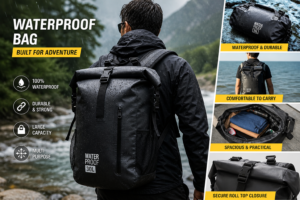
- ✅ Roll-top closure (most reliable)
- ⚠️ Waterproof zippers (good but not perfect)
👉 Regular zippers are the #1 reason bags leak.
🧪 Why Many “Waterproof” Bags Fail
❌ 1. Misleading Labels
Brands often use waterproof and water-resistant interchangeably.
❌ 2. Weak Zippers
Zippers allow water to seep in during heavy rain.
❌ 3. Poor Build Quality
Low-cost bags skip seam sealing to reduce cost.
❌ 4. Pressure & Duration
Some bags survive light rain but fail during:
- Heavy downpour
- Bike rides (high-speed rain impact)
- Water immersion
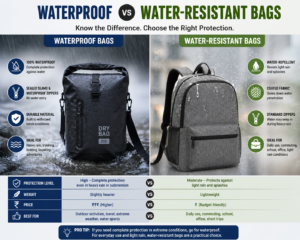
⚖️ Waterproof vs Water-Resistant (Reality Check)
| Feature | Waterproof Bags | Water-Resistant Bags |
|---|---|---|
| Heavy Rain | ✅ Yes | ❌ No |
| Submersion | ✅ Some models | ❌ No |
| Daily Use | ✅ Yes | ✅ Yes |
| Protection Level | High | Moderate |
👉 Many “waterproof” bags in the market are actually water-resistant.
🧠 How to Identify a True Waterproof Bag
Before buying, check the Mistakes to Avoid When Buying Waterproof Bags
- ✔ Roll-top closure
- ✔ Seam-sealed construction
- ✔ TPU or PVC material
- ✔ Strong customer reviews
- ✔ IP rating (if available)
👉 If any of these are missing, the bag is likely not fully waterproof.
🏍️ Real-World Scenario (India)
In Indian monsoon conditions:
- Light rain → Water-resistant may work
- Heavy rain / biking → Only waterproof works
👉 For bike riders, travelers, and trekkers, true waterproof bags are essential.
💡 Pro Tips for Maximum Protection
- Use a dry pouch for electronics
- Carry a rain cover as backup
- Avoid overfilling (affects sealing)
- Roll the top properly (at least 3 folds)
🔑 Final Thought
So, are waterproof bags really waterproof?
👉 Some are—but many are not.
✔ Truly waterproof bags:
- Use high-quality materials
- Have sealed seams
- Feature roll-top closures
❌ Others rely on marketing and fail in real conditions.
💯 If protection matters, don’t trust the label—check the features.
Order for Water Resistant Backpack Upto 55% OFF