
Home security has come a long way from simple CCTV cameras that recorded hours of footage without understanding what they were seeing. Today’s wireless security cameras are far more intelligent, thanks to artificial intelligence (AI). Instead of merely capturing video, they can recognize people, identify vehicles, detect packages, distinguish pets from intruders, and send alerts that matter.
For homeowners, this means fewer false alarms, faster notifications, and a more proactive approach to protecting their property.
In this post, we’ll explore how AI is transforming modern wireless home security, the technologies behind it, the benefits and limitations, and what to look for when choosing an AI-powered security camera.
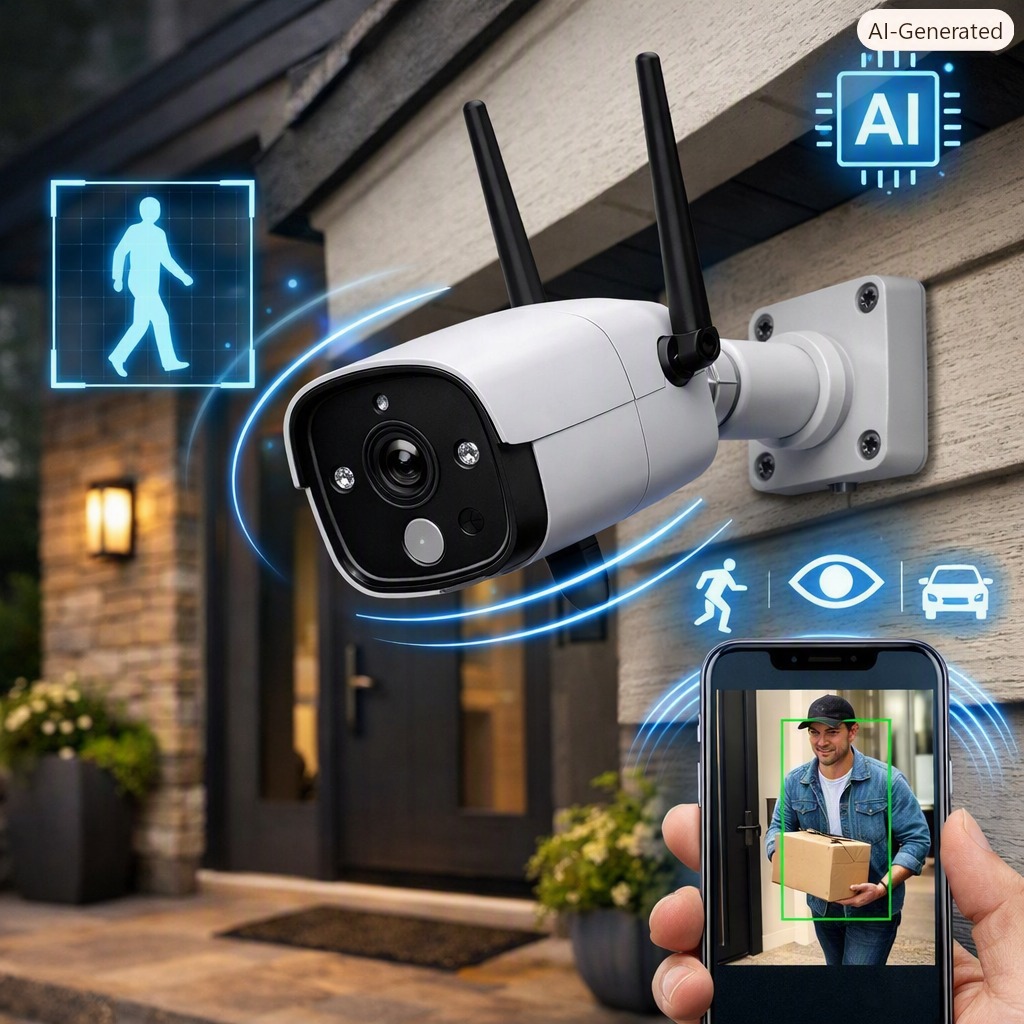
What Is AI in Home Security?
Artificial intelligence in home security refers to software that analyzes camera footage in real time to recognize patterns, classify objects, and make decisions based on what it “sees.”
Instead of sending an alert every time a tree branch moves or a car’s headlights flash across your driveway, AI-powered cameras evaluate the scene and notify you only when meaningful activity occurs.
This intelligent filtering makes wireless security systems far more useful than traditional motion-detection cameras.
How AI Works in Wireless Security Cameras
Modern AI security cameras combine several technologies:
- Computer vision
- Machine learning
- Image recognition
- Motion analysis
- Edge computing
- Cloud-based AI processing
These technologies allow cameras to interpret visual information rather than simply recording it.
For example, if someone walks toward your front door carrying a package, the camera can recognize the object as a person and may also identify the package, depending on the camera’s capabilities.
Key Ways AI Is Transforming Home Security
1. Smarter Motion Detection
Traditional motion sensors react to any movement.
AI-powered cameras can distinguish between:
- People
- Vehicles
- Pets
- Wildlife
- Falling leaves
- Shadows
- Rain
- Moving trees
This dramatically reduces unnecessary notifications.
Benefits
- Fewer false alerts
- Faster response to genuine threats
- Improved battery efficiency
- More useful event recordings
2. Facial Recognition
Some premium wireless security cameras can recognize familiar faces.
Instead of simply notifying you that someone is at your door, the system may identify the visitor as:
- A family member
- A frequent guest
- A trusted neighbor
Unknown visitors can be highlighted for closer attention.
Advantages
- Personalized notifications
- Improved awareness
- Reduced unnecessary concern
- Better visitor management
3. Intelligent Package Detection
With online shopping continuing to grow, package theft remains a concern for many households.
AI-enabled cameras can detect:
- Package deliveries
- Package removal
- Delivery drivers approaching the entrance
This helps homeowners receive timely alerts when deliveries arrive or if packages are moved unexpectedly.
4. Vehicle Recognition
Modern cameras can identify vehicles entering your driveway or parking area.
Some systems can distinguish between:
- Cars
- Motorcycles
- Vans
- Trucks
This feature is especially useful for larger properties and businesses.
5. Pet Detection
Pet owners benefit from AI cameras that recognize animals separately from people.
Instead of triggering constant alerts whenever a dog or cat moves around the yard, supported cameras can classify the activity more accurately.
This reduces notification fatigue while helping you monitor your pets when needed.
6. Intelligent Activity Zones
Not every part of your property requires monitoring.
AI allows you to define specific activity zones such as:
- Front door
- Driveway
- Backyard
- Garage entrance
- Side gate
Alerts are generated only when activity occurs inside those selected areas.
7. Color Night Vision with AI Enhancement
AI algorithms can improve nighttime image quality by enhancing details captured in low-light conditions.
Benefits include:
- Improved facial visibility
- Better object recognition
- Clearer vehicle identification
- Reduced image noise
While results vary by camera model and available light, AI image processing can make recorded footage easier to interpret.
8. Predictive Security Alerts
Some advanced security platforms analyze recurring activity over time.
Examples include:
- Regular delivery schedules
- Typical visitor patterns
- Unusual late-night movement
- Unexpected activity during vacations
Rather than reacting only after motion is detected, these systems aim to highlight events that differ from your home’s usual routine.
AI Features You Should Look For
When comparing wireless security cameras, prioritize models that include:
- Person detection
- Vehicle detection
- Package detection
- Pet recognition
- Smart activity zones
- Two-way audio
- Color night vision
- Local AI processing (where available)
- Automatic firmware updates
- Secure storage options
The combination of these features often provides a better experience than relying on video resolution alone.
Edge AI vs Cloud AI
AI processing generally happens in one of two ways.
Edge AI
Edge AI performs processing directly on the camera or a local hub.
Advantages
- Faster response times
- Improved privacy
- Reduced internet dependence
- Lower bandwidth usage
Limitations
- Processing power may be more limited than cloud-based systems.
Cloud AI
Cloud AI sends video to remote servers for analysis.
Advantages
- More advanced AI models
- Continuous software improvements
- Access from anywhere
Limitations
- Usually requires an internet connection.
- Some advanced features may require a subscription.
Benefits of AI-Powered Wireless Security Cameras
Better Security
AI helps identify meaningful events instead of reacting to every movement.
Fewer False Alarms
Rain, insects, tree branches, and shadows are less likely to trigger unnecessary alerts.
Faster Response
Important notifications arrive more quickly because cameras recognize significant events.
Improved Convenience
Homeowners spend less time reviewing recordings and more time responding to relevant activity.
Enhanced Monitoring
Remote access allows users to receive intelligent alerts wherever they are.
Are There Any Limitations?
Although AI has significantly improved home security, there are still factors to consider:
- Performance can vary between camera brands.
- Some advanced AI features require paid subscriptions.
- Facial recognition may not be available in every region or on every model.
- Extremely poor lighting or severe weather can reduce detection accuracy.
- AI systems improve over time through software updates, but they are not infallible.
Understanding these limitations helps set realistic expectations.
How AI Improves Home Security in Everyday Life
Here are a few practical examples of how AI makes a difference:
Package Delivery
Your camera sends a notification only when a delivery person approaches and a package is left at your door, rather than alerting you every time a passing vehicle is detected.
Family Arriving Home
Instead of a generic motion alert, the system may notify you that a recognized family member has arrived.
Backyard Monitoring
The camera distinguishes between your dog playing in the yard and an unfamiliar person entering the property, helping reduce unnecessary alerts.
Vacation Monitoring
If unusual activity occurs while you’re away, AI can prioritize that event over routine motion, making it easier to review important footage.
How to Choose an AI Security Camera
When shopping for an AI-powered wireless camera, consider:
- Video Resolution: At least 2K for clearer detail.
- AI Detection Types: Person, vehicle, pet, and package recognition.
- Storage: Local, cloud, or hybrid options.
- Night Vision: Infrared or color night vision.
- Power Source: Battery, wired, or solar-assisted.
- Smart Home Compatibility: Amazon Alexa, Google Home, or Apple HomeKit (where supported).
- Privacy Controls: Encryption, user permissions, and regular firmware updates.
Future Trends in AI Home Security
AI technology continues to evolve. Future wireless security systems may include:
- Improved object recognition
- Faster on-device AI processing
- Better energy efficiency
- Smarter automation with connected home devices
- More personalized notification settings
- Enhanced privacy controls through local processing
As these technologies mature, homeowners can expect security systems that are more responsive and easier to manage.
Frequently Asked Questions
What is AI in a wireless security camera?
AI enables a camera to analyze what it sees, helping it recognize people, vehicles, pets, packages, and other objects instead of responding to all motion equally.
Does AI reduce false alarms?
Yes. AI motion detection is designed to filter out less important movement, such as swaying branches or small animals, so users receive more relevant notifications.
Do all AI security cameras require a subscription?
No. Some cameras include basic AI features without ongoing fees, while others reserve advanced capabilities such as facial recognition or extended cloud storage for subscription plans.
Is AI processing secure?
Security depends on the manufacturer and the way data is handled. Look for cameras that support encrypted connections, secure account authentication, regular software updates, and clear privacy controls.
Is AI worth paying for?
For many homeowners, AI can improve convenience by reducing false alerts and providing more meaningful notifications. Whether advanced paid features are worthwhile depends on your security needs and how you plan to use the system.
Final Verdict
Artificial intelligence has fundamentally changed how wireless home security systems operate. Rather than acting as passive recording devices, modern AI-powered cameras can interpret events, prioritize meaningful activity, and provide notifications that help homeowners respond more effectively.
If you’re upgrading your home security, consider a camera that offers AI-based person detection, package recognition, intelligent activity zones, and secure storage options. While AI isn’t perfect, it can significantly improve the overall monitoring experience when combined with thoughtful placement and regular software updates.
As AI technology continues to evolve, wireless home security systems are likely to become even more accurate, efficient, and user-friendly, making them an increasingly valuable investment for protecting modern homes.
Conclusion
AI has moved wireless home security beyond simple surveillance. By helping cameras understand what they are seeing, artificial intelligence reduces false alarms, improves detection accuracy, and gives homeowners more useful information when it matters most.
Whether you’re securing an apartment, a family home, or a vacation property, choosing an AI-powered wireless security camera can provide smarter protection, greater convenience, and better peace of mind in 2026 and beyond.
Modern Wireless Home Security Cameras Upto 45% OFF