
Crispy French fries, golden samosas, crunchy chicken, and delicious pakoras are hard to resist. However, if you enjoy fried food regularly, you may wonder whether an air fryer is a healthier alternative to a traditional deep fryer.
Both appliances can produce tasty results, but they use different cooking methods. A deep fryer immerses food in hot oil, while an air fryer circulates hot air around the ingredients, usually with only a small amount of oil.
For people trying to reduce their calorie intake, manage their fat consumption, or prepare everyday meals with less oil, an air fryer can be a useful kitchen appliance. However, the healthiest choice also depends on the ingredients, cooking temperature, portion size, and frequency of consumption.
In this, we compare an air fryer vs a deep fryer across calories, fat content, cooking methods, taste, convenience, and safety to help you decide which option suits your lifestyle.
What Is an Air Fryer?
An air fryer is a countertop kitchen appliance that cooks food by circulating hot air around it. A heating element warms the air, while a fan moves it around the cooking chamber to help brown and crisp the food.
Most air fryers require little or no added oil for certain foods, particularly frozen products that already contain oil. For homemade potatoes, vegetables, or snacks, adding a small amount of oil can improve browning and texture.
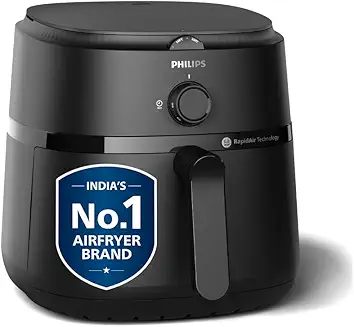
Air fryers are commonly used to prepare:
- French fries and potato wedges
- Samosas, spring rolls, and cutlets
- Chicken wings and other chicken dishes
- Paneer tikka and roasted vegetables
- Fish fillets and selected seafood
- Reheated pizza and leftover snacks
Many models also feature adjustable temperature settings, timers, and preset cooking programs. Depending on the design, an air fryer may support roasting, baking, grilling, or other cooking functions.
What Is a Deep Fryer?
A deep fryer cooks food by completely submerging it in hot oil. The hot oil transfers heat quickly to the food, helping create a crisp exterior while the inside cooks.
Deep frying is widely used in restaurants, commercial kitchens, and homes because it can produce a distinctive texture and flavour.

Popular deep-fried foods include:
- French fries and potato chips
- Samosas and pakoras
- Fried chicken and fish
- Doughnuts and other fried desserts
- Breaded snacks and fritters
A deep fryer generally requires a larger quantity of oil than an air fryer. Some oil may remain on the food after cooking, increasing its overall fat and calorie content.
Air Fryer vs Deep Fryer: Quick Comparison
| Feature | Air Fryer | Deep Fryer |
|---|---|---|
| Cooking method | Circulating hot air | Food submerged in hot oil |
| Added oil | Little or none for many foods | Large quantity of oil needed |
| Fat content | Usually lower for comparable foods | Usually higher because of oil absorption |
| Calories | Often lower for comparable recipes | Often higher for comparable recipes |
| Texture | Crispy, but can be drier | Often crispier with a traditional fried texture |
| Cooking speed | Varies by food and appliance | Often fast for suitable foods |
| Capacity | Limited by basket or tray size | Depends on fryer size and oil capacity |
| Cleaning | Usually easier, depending on design | Oil disposal and cleaning can be more involved |
| Oil storage | No large oil reservoir required | Oil must be handled and stored or discarded safely |
| Best suited for | Everyday lower-oil cooking | Traditional deep-fried foods |
Overall winner for reducing oil intake: The air fryer generally has the advantage when both appliances are used to prepare comparable foods.
1. Which Is Healthier: Air Fryer or Deep Fryer?
For most people who want to reduce their consumption of added oil and dietary fat, an air fryer is generally the healthier option.
The main difference is the amount of oil used during cooking. Deep frying exposes food to a large volume of hot oil, and some of that oil can be absorbed. Air frying uses hot air instead, so much less added oil is typically needed.
However, an air fryer does not automatically make every meal healthy. Frozen snacks, heavily breaded foods, processed meats, and foods high in sodium can still be less nutritious when cooked in an air fryer.
Similarly, deep-fried foods can fit into an otherwise balanced diet when eaten occasionally and in sensible portions.
The biggest health advantage comes from reducing unnecessary added oil while choosing nutritious ingredients and appropriate cooking methods.
2. Air Fryer vs Deep Fryer: Calories Compared
Calories are an important consideration if you are trying to manage your weight.
Oil is energy-dense, providing approximately 9 calories per gram. As a result, the amount of oil absorbed during cooking can significantly affect the final calorie content of a meal.
Air frying can reduce calories when it replaces deep frying and uses substantially less oil.
For example, homemade potato wedges prepared with a light coating of oil may contain fewer calories than similar wedges deep-fried in a large amount of oil.
However, the exact difference depends on:
- The type and quantity of food
- How much oil is used or absorbed
- Whether the food is coated in breadcrumbs or batter
- The serving size
- The cooking method and duration
There is no single calorie reduction that applies to every food. For the most accurate comparison, use the ingredient quantities and nutrition information for the specific recipe.
3. Which Uses Less Fat?
Air fryers generally use less added fat than deep fryers.
When you prepare food in an air fryer, you can often control the amount of oil directly. A small measured amount may be sufficient to improve the texture of potatoes, vegetables, or homemade snacks.
With deep frying, the food is immersed in oil, and the final fat content depends partly on how much oil it absorbs.
This difference can be particularly useful if you regularly prepare fried snacks at home.
Does Air Frying Eliminate Fat?
No. Foods naturally contain fat, and some air-fried products also contain oil from their ingredients or manufacturing process.
For example, frozen French fries may already contain added oil. Cooking them in an air fryer does not remove all of that fat.
For a lower-fat meal, start with fresh ingredients, measure added oil, and avoid assuming that the cooking appliance alone determines the nutritional value.
4. Which Produces Crispier Food?
Deep frying often produces a more uniform, traditional fried texture because hot oil surrounds the food during cooking.
An air fryer can produce a crispy exterior too, but results depend on the ingredients, moisture level, airflow, and quantity of food in the basket.
| Food | Air Fryer Result | Deep Fryer Result |
|---|---|---|
| French fries | Crisp with little added oil | Often very crisp and rich |
| Samosas | Good browning with a lighter texture | Traditional crunchy pastry |
| Chicken wings | Crisp skin with suitable preparation | Richer fried coating when battered |
| Paneer tikka | Well-suited to roasting and browning | Not typically deep-fried in the same way |
| Pakoras | Can work with suitable batter and preparation | Usually delivers the more traditional texture |
| Potato wedges | Good crispness when spaced apart | Often crisp outside and soft inside |
If your main priority is a traditional deep-fried texture, a deep fryer may perform better for some recipes. If you want crisp food with less added oil, an air fryer is usually the more practical choice.
5. Which Is Better for Weight Management?
An air fryer can support weight management when it helps you prepare lower-calorie versions of foods you already enjoy.
Reducing the amount of oil in a recipe may lower its calorie content without requiring you to give up every favourite snack.
For example, you can prepare potato wedges with a measured teaspoon of oil rather than immersing them in oil. You can also air-fry vegetables, fish, or lean chicken as part of a balanced meal.
However, weight management depends on your overall eating pattern, portion sizes, physical activity, and long-term habits.
Switching to an air fryer will not automatically lead to weight loss if you frequently eat oversized portions or rely heavily on calorie-dense processed foods.
Practical tip: Use the air fryer to make everyday meals more convenient, but combine it with vegetables, protein-rich foods, whole grains, and sensible portions.
6. Which Is Better for Heart Health?
The type of fat you consume matters for cardiovascular health.
Replacing foods high in saturated fat with foods containing more unsaturated fats can support healthier blood cholesterol levels. Reducing excessive oil consumption may also help manage overall calorie intake.
An air fryer can make this substitution easier by reducing the amount of oil needed for certain recipes.
However, the health impact depends on the oil, ingredients, and overall diet. Using a large amount of butter or adding substantial quantities of oil to an air-fried meal can reduce its potential advantage.
It is also important to avoid repeatedly heating cooking oil beyond its recommended use. Overheating and repeated reuse can degrade oil and produce undesirable compounds.
Neither appliance guarantees a heart-healthy meal. The ingredients and cooking practices remain important.
7. Does Air Frying Reduce Harmful Compounds?
Cooking methods can affect the formation of certain compounds in food.
One example is acrylamide, which can form in some starchy foods, including potatoes, during high-temperature cooking. The amount formed depends on factors such as the food’s composition, cooking temperature, and duration.
Air frying does not eliminate acrylamide. Depending on the recipe and cooking conditions, it may produce less or more than other methods.
To reduce excessive browning when cooking potatoes:
- Aim for a golden-yellow colour rather than dark brown.
- Avoid unnecessarily high temperatures or extended cooking.
- Follow the manufacturer’s guidance for cooking times.
- Soak cut potatoes in water before cooking if appropriate, then dry them thoroughly.
- Avoid eating heavily charred food regularly.
Deep frying can also produce undesirable compounds when oil is overheated or repeatedly reused. Maintaining suitable temperatures and replacing degraded oil are important food-safety practices.
8. Air Fryer vs Deep Fryer: Which Is Safer?
Both appliances require care because they generate high temperatures.
Air Fryer Safety
Air fryers avoid the large reservoir of hot oil used in deep frying, reducing the risk of spills involving a large quantity of oil.
Nevertheless, the cooking basket and exterior surfaces can become hot. Steam may escape when the basket is opened, and food can burn if it is left cooking too long.
For safer use:
- Place the appliance on a stable, heat-resistant surface.
- Leave the ventilation space recommended by the manufacturer.
- Avoid overfilling the basket.
- Use appropriate utensils and oven mitts when necessary.
- Clean accumulated grease and food residue.
Deep Fryer Safety
Deep fryers involve a greater quantity of hot oil, which can cause serious burns if spilled or splashed.
For safer operation:
- Keep water away from hot oil.
- Dry food before placing it in the fryer.
- Avoid overfilling the oil container.
- Maintain the recommended oil temperature.
- Keep children away from the appliance.
- Allow oil to cool completely before handling or disposal.
Never pour water onto a hot-oil fire. If oil catches fire, do not use water; turn off the heat if it is safe to do so and follow appropriate fire-safety procedures.
For most households, an air fryer is easier to manage because it does not require a large quantity of hot oil.
9. Which Is More Convenient for Everyday Cooking?
An air fryer is often more convenient for everyday household use, especially when preparing small or medium portions.
Many models include a timer and adjustable temperature settings, allowing you to cook snacks or side dishes with relatively little preparation. Removable baskets can also make cleaning simpler.
Deep fryers can be convenient when preparing large batches of foods that benefit from immersion frying. However, handling, filtering, storing, or disposing of oil requires additional effort.
| Everyday consideration | Air Fryer | Deep Fryer |
|---|---|---|
| Preparation | Usually requires little oil preparation | Requires filling with oil |
| Monitoring | Periodic checking and shaking may be needed | Food must be monitored during frying |
| Cleaning | Often simpler | Oil residue and disposal take extra effort |
| Batch cooking | May require several batches | Can be efficient for suitable large batches |
| Kitchen space | Requires countertop or storage space | Also requires dedicated space and safe oil handling |
Actual convenience depends on your cooking habits, household size, and appliance design.
10. Which Is More Economical?
The cost comparison depends on purchase price, electricity use, cooking time, and the amount of oil consumed.
An air fryer may cost more initially than a basic frying pan or some entry-level deep fryers. However, it typically requires much less added oil, which can reduce recurring oil expenses.
A deep fryer may be suitable for someone who regularly prepares large quantities of deep-fried food, but oil purchases and replacement costs can add up.
Electricity consumption varies by appliance wattage and cooking duration. A smaller air fryer may be efficient for modest portions, while larger meals or multiple batches can change the comparison.
When evaluating cost, consider the total expense over time rather than the purchase price alone.
11. Air Fryer vs Deep Fryer for Indian Cooking
Indian cooking includes a wide range of snacks, vegetables, meat dishes, and regional specialities. Both appliances can be useful, depending on the recipe.
Foods That Work Well in an Air Fryer
- Aloo tikki and potato wedges
- Paneer tikka
- Roasted vegetables
- Chicken tikka and selected kebabs
- Reheated samosas and other snacks
- Homemade cutlets with a light coating of oil
Foods That May Suit Deep Frying Better
- Traditional pakoras with loose batter
- Some types of kachori
- Certain puris and bhaturas
- Snacks that require rapid, even immersion in hot oil
Some traditional foods can be adapted for air frying, but the texture may differ from the original recipe. Batter consistency, shaping, and cooking technique may need adjustment.
If you prepare Indian snacks frequently and want to reduce added oil, an air fryer can be a useful addition to your kitchen. You can still use other cooking methods when a recipe depends on deep frying for its characteristic texture.
12. Can You Replace a Deep Fryer With an Air Fryer?
For many everyday recipes, yes. An air fryer can replace deep frying for foods such as potato wedges, chicken pieces, roasted vegetables, and some frozen snacks.
However, it is not a perfect replacement for every recipe. Foods with thin or loose batter may not cook in the same way without adjustments, and certain traditional fried foods depend on immersion in hot oil.
Before switching completely, consider the foods you prepare most often.
If you mainly cook frozen snacks, vegetables, chicken, and potatoes, an air fryer may meet most of your needs. If you regularly make large batches of traditional deep-fried foods, you may prefer to retain both options or use a pan for occasional frying.
Tips for Making Air-Fried Food Healthier
An air fryer can help reduce added oil, but good cooking habits make the biggest difference.
- Start with fresh ingredients: Fresh potatoes, vegetables, fish, and lean protein give you greater control over the recipe.
- Measure your oil: Use a small amount where needed instead of pouring it freely.
- Avoid excessive browning: Cook foods until appropriately done without leaving them dark or burnt.
- Control portions: A lower-oil snack can still contribute a substantial number of calories when eaten in large quantities.
- Choose suitable seasonings: Use herbs, spices, garlic, and lemon to add flavour without relying entirely on salt-heavy seasonings.
- Limit heavily processed foods: An air fryer does not transform every processed snack into a nutritious meal.
- Keep the appliance clean: Remove grease and food residue according to the manufacturer’s instructions.
- Check food safety: Cook meat and poultry to safe internal temperatures rather than judging doneness by appearance alone.
Frequently Asked Questions
1. Is an air fryer healthier than a deep fryer?
Generally, yes, when preparing comparable foods because an air fryer usually requires much less added oil. However, the nutritional value still depends on the ingredients, portion size, and cooking method.
2. How much oil can an air fryer save?
The amount varies by recipe. Some foods can be cooked with no additional oil, while others benefit from a small measured quantity. Deep frying uses considerably more oil, but the amount absorbed by the food differs.
3. Are air-fried French fries healthier than deep-fried French fries?
They can contain less fat and fewer calories when prepared with less added oil. The result depends on whether you use fresh potatoes or frozen fries, the amount of oil, and the serving size.
4. Does air frying cause cancer?
Air frying itself is not established as a cause of cancer. However, high-temperature cooking can form compounds such as acrylamide in certain starchy foods. Avoiding excessive browning and following appropriate cooking instructions can help reduce exposure.
5. Can I use an air fryer every day?
You can use an air fryer regularly as part of a balanced diet. Focus on varied ingredients, sensible portions, and appropriate cooking temperatures rather than relying exclusively on fried or heavily processed foods.
6. Is deep frying unhealthy?
Deep frying can increase the fat and calorie content of food, particularly when oil is absorbed during cooking. Its health impact depends on the food, the oil used, cooking practices, and how frequently deep-fried meals are consumed.
7. Which appliance is better for frozen foods?
Air fryers work well with many frozen foods, including fries, nuggets, and spring rolls. Check the package instructions and appliance guidance, since some products may need different cooking times or temperatures.
8. Is an air fryer worth buying if I already have a deep fryer?
It may be worthwhile if you want to reduce added oil, simplify cleanup, or prepare a wider variety of everyday meals. Whether it is worth the cost depends on how often you cook and which features you will use.
9. Can air-fried food taste as good as deep-fried food?
Air-fried food can be delicious and crisp, but the texture and flavour are not always identical. Deep frying often creates a richer, more traditional fried texture, while air frying can deliver satisfying results with less added oil.
10. Which is better for families: an air fryer or a deep fryer?
An air fryer is a practical choice for families who want lower-oil cooking and versatile everyday meals. Choose the capacity according to your household size. A deep fryer may suit households that regularly prepare large batches of traditional fried snacks.
Final Verdict: Air Fryer or Deep Fryer?
For most households, an air fryer is the healthier choice when the goal is to reduce added oil, fat, and potentially calories without giving up crispy foods entirely.
A deep fryer still has advantages for recipes that require traditional immersion frying, especially when texture is a priority. However, it requires more oil and additional care when handling hot fat.
Choose an air fryer if you want a versatile appliance for everyday meals, roasted vegetables, potato snacks, chicken, and selected Indian dishes. Consider a deep fryer if you occasionally need the distinctive texture of traditional deep-fried foods.
Ultimately, the healthiest approach is to focus on the ingredients you use, how much oil you add, your cooking temperature, and the balance of your overall diet.
Disclosure: This article may contain affiliate links. If you purchase through qualifying links, we may earn a commission at no additional cost to you.
Healthier Air Fryers Upto 55% OFF