
If you want to create high-quality videos without carrying a bulky mirrorless camera, the DJI Osmo Pocket 3 is one of the most interesting compact vlogging cameras available today.
What makes the Pocket 3 different is its combination of a 1-inch CMOS sensor, 4K video, three-axis mechanical gimbal stabilization, ActiveTrack subject tracking, and a large rotating touchscreen in a remarkably small body.
For travel vloggers, YouTubers, Instagram creators, solo filmmakers, and anyone upgrading from a smartphone, this combination can be incredibly useful. You can put the camera in your pocket, turn it on, point it at yourself, and start recording stabilized footage within seconds.
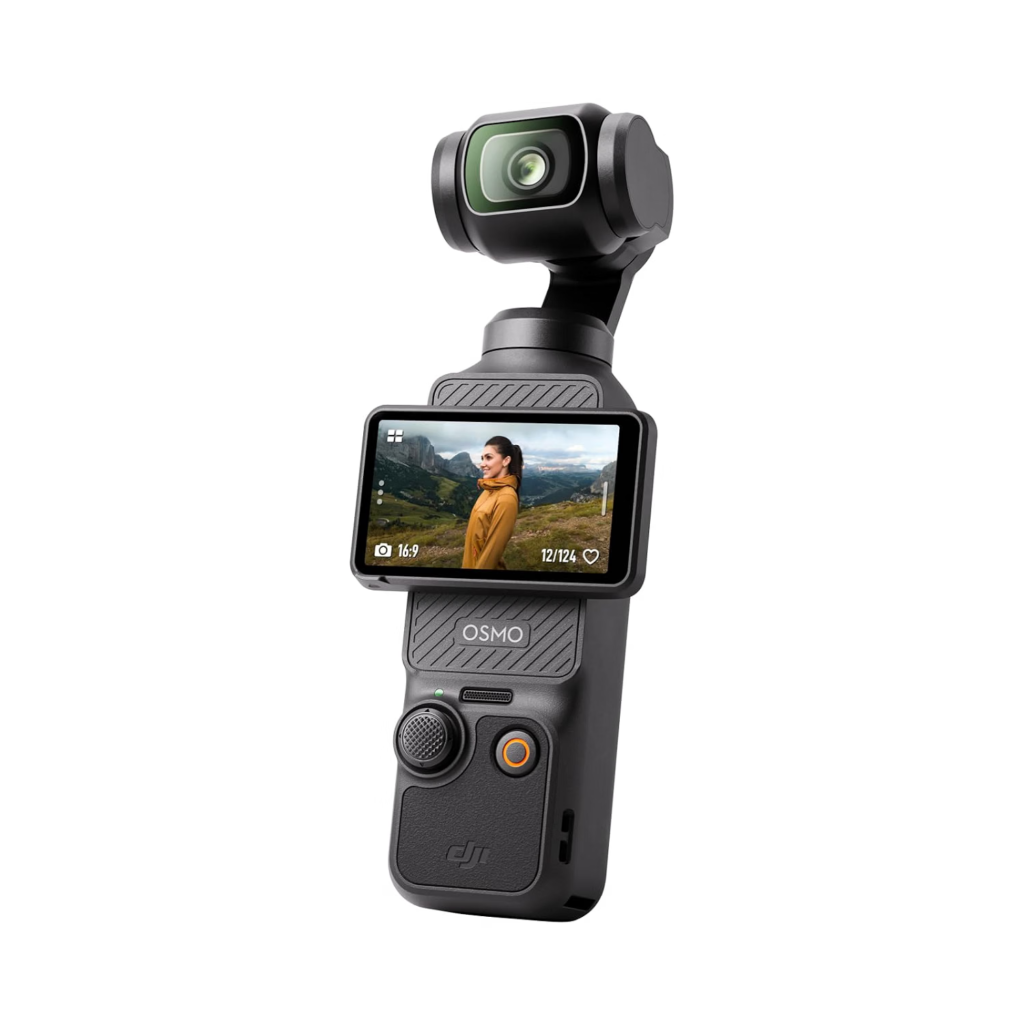
But does the DJI Osmo Pocket 3 actually deliver enough image quality to replace a traditional camera? And is it worth buying for vloggers in India?
Let’s find out.
DJI Osmo Pocket 3: Quick Overview
| Feature | DJI Osmo Pocket 3 |
|---|---|
| Camera Type | Compact gimbal camera |
| Sensor | 1-inch CMOS |
| Resolution | 9.4MP effective for 16:9 video / 12MP stills |
| Lens | 20mm equivalent |
| Aperture | f/2.0 |
| Stabilization | 3-axis mechanical gimbal |
| Video | Up to 4K/120fps |
| Slow Motion | 4K/120fps |
| Screen | 2-inch rotating touchscreen |
| Autofocus | Full-pixel fast focusing |
| Tracking | ActiveTrack 6.0 |
| Color | 10-bit D-Log M / HLG |
| Audio | Built-in stereo microphones |
| Wireless Audio | DJI Mic 2 compatible |
| Weight | Approx. 179g |
| Battery | Built-in |
| Charging | USB-C |
| Best For | Vlogging, travel, YouTube and social media |
What Is the DJI Osmo Pocket 3?
The DJI Osmo Pocket 3 is a pocket-sized camera with a built-in three-axis mechanical gimbal.
That description sounds simple, but the combination is what makes this camera special.
Traditional cameras rely on optical or electronic stabilization. The Pocket 3 physically stabilizes the camera using a miniature motorized gimbal.
The result is remarkably smooth footage when you’re walking, panning or moving around.
The camera also features a larger 1-inch CMOS sensor, which is a major upgrade over many tiny action cameras and older compact cameras.
Instead of carrying:
- Camera
- Gimbal
- Tripod
- External microphone
- Smartphone monitor
you can potentially accomplish much of the same work with a tiny Pocket 3 setup.
That is its biggest selling point.
1-Inch CMOS Sensor
The most significant hardware improvement in the Osmo Pocket 3 is its 1-inch CMOS sensor.
A larger sensor generally provides advantages in image quality, dynamic range and low-light performance compared with the much smaller sensors used in many compact action cameras.
The Pocket 3 therefore isn’t just about portability.
It can also produce footage with a more cinematic look, especially when lighting conditions are good.
The sensor is particularly useful for:
- Travel videos
- Indoor vlogging
- Restaurant videos
- City walks
- Product content
- Interviews
- YouTube videos
- Social media reels
For a camera this small, the sensor is impressive.
4K Video at Up to 120fps
Video is the main reason most people buy the Pocket 3.
The camera can record 4K video at up to 120fps, providing excellent flexibility for slow-motion footage.
For everyday vlogging, 4K 24fps, 30fps or 60fps will generally be more appropriate.
When you want dramatic slow-motion sequences, 120fps becomes useful.
You can use it for:
- Travel B-roll
- Sports
- Water activities
- City scenes
- Food preparation
- Fashion videos
- Automotive content
- Cinematic sequences
The combination of 4K resolution and high frame rates gives creators plenty of options during editing.
Three-Axis Mechanical Gimbal Stabilization
This is the feature that truly separates the Pocket 3 from a conventional compact camera.
The built-in three-axis mechanical gimbal physically stabilizes the camera.
When you walk with the Pocket 3, the gimbal compensates for small movements and helps keep the camera level.
This is especially useful for:
Walking Vlogs
You can record yourself while walking without needing to hold a large gimbal.
Travel Videos
The camera can capture smooth footage while you’re exploring a city, museum, market or tourist attraction.
Follow Shots
The gimbal can create smooth movements that would be difficult to achieve handheld.
B-Roll
Slow pans and controlled camera movements can make travel and product videos look more polished.
For many users, this eliminates the need to purchase a separate smartphone gimbal.
ActiveTrack 6.0
Another major feature is ActiveTrack 6.0.
The tracking system is designed to keep a selected subject within the frame.
For solo creators, this can be extremely useful.
Imagine placing the Pocket 3 on a tripod and walking around a room while explaining something.
Instead of remaining fixed on one point, the camera can track you.
This is particularly useful for:
- Fitness creators
- Cooking channels
- Tutorials
- Dance videos
- Presentations
- Interviews
- Solo YouTubers
It effectively gives you a virtual camera operator.
Rotating 2-Inch Touchscreen
The Pocket 3 has a 2-inch full-color rotating touchscreen.
This isn’t just a display upgrade.
Rotating the screen can automatically switch between horizontal and vertical shooting.
That’s useful because creators now need content for multiple platforms.
Horizontal Mode
Ideal for:
- YouTube
- Television
- Traditional video
- Landscape travel videos
Vertical Mode
Ideal for:
- Instagram Reels
- YouTube Shorts
- TikTok
- Other mobile-first platforms
Instead of cropping a horizontal video later, you can capture vertical footage directly.
DJI Osmo Pocket 3 for Vlogging
Vlogging is where the Pocket 3 really shines.
A good vlog camera needs to be:
- Small
- Lightweight
- Easy to operate
- Stabilized
- Capable of good audio
- Fast to start
- Good in changing lighting
- Easy to frame yourself with
The Pocket 3 checks most of those boxes.
Its 20mm-equivalent lens provides a useful perspective for handheld self-recording, while the gimbal keeps footage smooth.
Because the camera weighs only around 179 grams, you can comfortably carry it for hours.
That makes it especially appealing for travel vloggers.
DJI Osmo Pocket 3 for YouTube
The Pocket 3 can be an excellent YouTube camera for certain types of creators.
It works particularly well for:
- Travel channels
- Walking tours
- Daily vlogs
- Food channels
- Technology channels
- Educational content
- Behind-the-scenes videos
- Lifestyle creators
The major advantage is convenience.
You don’t need to assemble a camera, lens and gimbal every time you want to record.
Take the Pocket 3 out, rotate the screen, press record and start shooting.
For spontaneous content, that convenience can be more valuable than having a larger interchangeable-lens camera.
DJI Osmo Pocket 3 Image Quality
For such a small camera, image quality is impressive.
The 1-inch sensor provides better image quality than many older pocket cameras and action cameras.
In daylight, footage can look detailed and clean.
The camera can also produce attractive background separation when the subject is relatively close to the lens.
However, expectations should remain realistic.
A 1-inch sensor isn’t going to match a modern full-frame mirrorless camera with a large-aperture lens in every situation.
The Pocket 3 wins through portability and stabilization, not absolute image quality.
Low-Light Performance
The larger sensor is particularly useful when lighting becomes challenging.
Compared with many action cameras and smartphones using tiny sensors, the Pocket 3 can produce cleaner-looking footage in moderately low-light environments.
It is useful for:
- Restaurants
- Cafés
- Night markets
- Indoor events
- Evening city walks
- Hotel rooms
But extremely dark scenes will still challenge a small camera.
If you’re a professional filmmaker shooting controlled productions, a larger interchangeable-lens camera will provide greater low-light flexibility.
For travel vlogging, however, the Pocket 3 is remarkably capable.
10-Bit D-Log M and HLG
Advanced users will appreciate the camera’s support for 10-bit color recording and profiles such as D-Log M and HLG.
Why does this matter?
Because recording more color information gives editors greater flexibility during post-production.
D-Log M is particularly useful when you want to color-grade your footage and create a consistent cinematic look.
For beginners, you don’t need to worry about log profiles immediately.
You can simply use standard recording modes and learn color grading later.
That makes the Pocket 3 suitable for both beginners and more advanced creators.
Built-In Audio
Video quality is only half the equation.
Audio matters just as much.
The Pocket 3 includes multiple built-in microphones designed to capture stereo audio.
For casual vlogging, the internal microphones can be sufficient.
But if you’re recording professional interviews, outdoor videos, or content where speech clarity is critical, an external wireless microphone can be a worthwhile upgrade.
The Pocket 3 works particularly well with DJI’s wireless microphone ecosystem, including the DJI Mic 2.
This can create a very compact creator setup.
DJI Osmo Pocket 3 for Travel
This may be the camera’s strongest use case.
Imagine going on a week-long trip.
Instead of carrying a mirrorless camera, several lenses, a gimbal and a tripod, you can carry:
Pocket 3 + small accessory kit + wireless microphone.
That’s it.
You can capture:
- Landscapes
- Walking footage
- Selfie videos
- Food
- Architecture
- Street scenes
- B-roll
- Interviews
The camera is small enough that you’re much more likely to have it with you.
And that’s important.
The best camera isn’t always the one with the biggest sensor.
Sometimes it’s the one you actually carry.
DJI Osmo Pocket 3 for Instagram Reels and Shorts
Short-form content creators can benefit significantly from the Pocket 3.
The rotating display makes vertical shooting simple.
The gimbal produces smoother footage than most handheld smartphone recordings.
The camera can also capture cinematic B-roll that can be edited into short-form videos.
For creators who publish on multiple platforms, being able to switch between horizontal and vertical formats is a major advantage.
DJI Osmo Pocket 3 Battery Life
The Pocket 3 uses a built-in battery.
Battery life depends on factors such as:
- Resolution
- Frame rate
- Screen brightness
- Tracking
- Wi-Fi
- Environmental temperature
For long shooting days, carrying a power bank is a smart idea.
DJI also offers charging and battery accessories designed to make longer recording sessions easier.
Because the Pocket 3 is so small, battery capacity is naturally limited compared with larger camera systems.
DJI Osmo Pocket 3 Pros and Cons
Pros
- Extremely compact
- Only around 179g
- Large 1-inch sensor
- Excellent three-axis mechanical stabilization
- 4K video up to 120fps
- ActiveTrack 6.0
- Rotating touchscreen
- Horizontal and vertical shooting
- 10-bit D-Log M and HLG
- Good built-in microphones
- Strong autofocus
- Excellent for travel
- Excellent for solo creators
- Easy to use
- Can replace a separate handheld gimbal for many users
Cons
- Fixed lens
- No interchangeable lenses
- Small screen compared with a mirrorless camera
- Built-in battery
- Low-light performance still limited compared with larger sensors
- Gimbal mechanism requires more care than a fixed camera
- Accessories can increase the overall cost
- Not ideal for professional long-form filmmaking
DJI Osmo Pocket 3 vs Smartphone
The smartphone is the Pocket 3’s biggest competitor.
Modern smartphones have excellent computational photography, HDR processing and stabilization.
So why buy the Pocket 3?
The answer is mechanical stabilization and dedicated-camera workflow.
The Pocket 3 provides:
- 1-inch sensor
- Physical three-axis gimbal
- Dedicated camera controls
- ActiveTrack
- High-quality 4K video
- 10-bit recording
- Better camera movement
- Dedicated creator accessories
A smartphone remains better for instant sharing.
The Pocket 3 is better if you’re serious about creating video.
DJI Osmo Pocket 3 vs Action Camera
Action cameras are designed for rugged outdoor use.
They’re excellent for:
- Cycling
- Hiking
- Swimming
- Motorcycling
- Extreme sports
The Pocket 3 isn’t intended to replace a rugged action camera.
Instead, it prioritizes:
- Image quality
- Vlogging
- Smooth gimbal movement
- Subject tracking
- Portrait-style shooting
- Cinematic footage
If you need a waterproof camera for adventure sports, look at an action camera.
If you want a compact camera for travel and vlogging, the Pocket 3 is more compelling.
Who Should Buy the DJI Osmo Pocket 3?
The Pocket 3 is particularly well suited to:
- YouTubers
- Travel vloggers
- Instagram creators
- Short-form video creators
- Solo filmmakers
- Food bloggers
- Walking-tour creators
- Lifestyle influencers
- Students creating video content
- Travelers who want a lightweight camera
It may not be the right choice for:
- Professional photographers
- Wildlife photographers
- Sports photographers
- Underwater creators
- Studio filmmakers requiring interchangeable lenses
- Users who need extreme telephoto reach
Is DJI Osmo Pocket 3 Worth Buying?
For vloggers and travel creators, yes.
The Pocket 3 solves one of the biggest problems with traditional camera setups: complexity.
You don’t need to attach a separate gimbal.
You don’t need a heavy camera bag.
You don’t need to spend several minutes setting up before recording.
You simply turn it on and shoot.
The combination of the 1-inch sensor, 3-axis mechanical stabilization, 4K/120fps video, ActiveTrack 6.0 and rotating display makes it one of the most creator-friendly pocket cameras available.
Its biggest limitation is also obvious: it’s a fixed-lens camera.
If you want to shoot wildlife at long distances, professional portraits with specialized lenses, or other photography that requires interchangeable optics, a mirrorless camera is still the better option.
Conclusion
The DJI Osmo Pocket 3 Vlogging Camera is one of those products that makes sense immediately once you understand who it is designed for.
It isn’t trying to replace a professional full-frame camera.
Instead, it offers something different: serious video capability in a genuinely pocketable package.
The 1-inch sensor provides impressive image quality for its size, while the three-axis gimbal delivers smooth footage without requiring a separate stabilizer.
Add ActiveTrack 6.0, 4K/120fps recording, 10-bit color, a rotating touchscreen and strong audio options, and you have an extremely capable tool for modern content creation.
For travel vloggers, YouTubers and social media creators, the Pocket 3 is one of the easiest cameras to recommend.
Our Rating: 4.7/5
Best for: Travel vlogging, YouTube, Instagram Reels, Shorts, solo creators and everyday video.
Frequently Asked Questions
Is DJI Osmo Pocket 3 good for vlogging?
Yes. Its small size, 1-inch sensor, three-axis mechanical gimbal, rotating screen and subject tracking make it particularly well suited to vlogging.
Does DJI Osmo Pocket 3 shoot 4K?
Yes. The Pocket 3 supports 4K video recording and can record up to 120fps in supported modes.
Does DJI Osmo Pocket 3 have a 1-inch sensor?
Yes. The Pocket 3 uses a 1-inch CMOS sensor, which is one of its major advantages over many small action cameras.
Is DJI Osmo Pocket 3 better than a smartphone?
It depends on your priorities. Smartphones are better for convenience and instant sharing, while the Pocket 3 offers a larger sensor, mechanical gimbal stabilization, dedicated controls and advanced video features.
Can DJI Osmo Pocket 3 shoot vertical video?
Yes. Its rotating touchscreen makes it easy to switch between horizontal and vertical shooting.
Is DJI Osmo Pocket 3 good for YouTube?
Yes. It is especially good for travel channels, vlogs, walking videos, product content and solo creators.
Does DJI Osmo Pocket 3 have interchangeable lenses?
No. The Pocket 3 has a fixed 20mm-equivalent lens. Its advantage is portability rather than lens flexibility.
Does DJI Osmo Pocket 3 have image stabilization?
Yes. It uses a three-axis mechanical gimbal rather than relying only on electronic stabilization.
DJI Osmo Pocket 3, Vlogging Camera -40% OFF