
Keeping your home clean is about more than appearances—it’s also about creating a healthier living environment. A good vacuum cleaner can remove dust, allergens, pet hair, and debris that ordinary sweeping often leaves behind. But with so many models available, from compact cordless stick vacuums to advanced robot cleaners and heavy-duty wet & dry machines, choosing the right one isn’t always straightforward.
This guide is based on current cleaning technology, practical buying considerations, and the features that consistently matter most to homeowners. Instead of focusing on marketing claims, we’ll explain what actually makes a vacuum cleaner perform well and how to match those features to your home’s needs.
Whether you’re buying your very first vacuum cleaner or replacing an older model, this guide will help you make an informed decision and avoid spending money on features you don’t need.
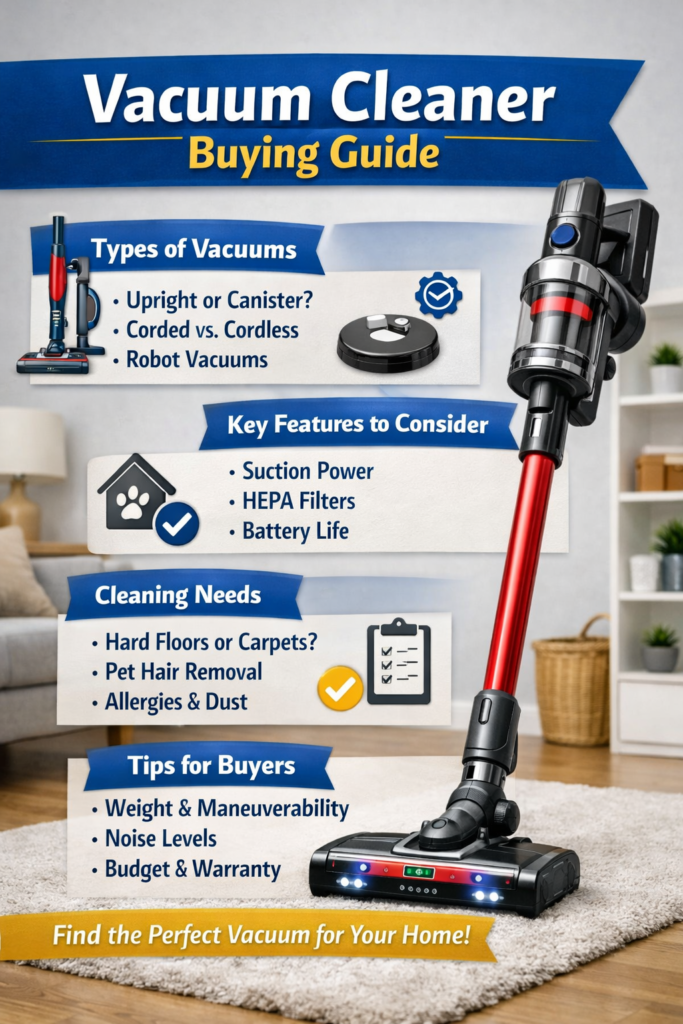
Why Buying the Right Vacuum Cleaner Matters
A vacuum cleaner is a long-term household investment. The right model saves time, improves cleaning efficiency, and contributes to better indoor air quality. The wrong choice can lead to poor performance, unnecessary maintenance, and frustration.
A quality vacuum cleaner can help you:
- Remove fine dust and allergens from floors and furniture
- Reduce pet hair and dander
- Clean hard-to-reach areas more effectively
- Extend the life of carpets and rugs
- Minimize manual effort during routine cleaning
- Keep your home healthier for children, elderly family members, and allergy sufferers
Types of Vacuum Cleaners Explained
Understanding the main categories is the first step toward choosing the right model.
1. Cordless Stick Vacuum
Cordless stick vacuums are lightweight, rechargeable, and easy to maneuver. They are ideal for quick daily cleaning and homes with limited storage space.
Best for:
- Apartments
- Small to medium-sized homes
- Hardwood floors
- Tile flooring
- Everyday cleaning
Advantages:
- Lightweight
- Portable
- Easy storage
- No power cord
- Quick setup
Limitations:
- Limited battery life
- Smaller dustbin
2. Canister Vacuum Cleaner
Canister vacuums combine strong suction with flexibility. Their hose-and-canister design makes it easier to clean stairs, furniture, curtains, and tight spaces.
Best for:
- Mixed flooring
- Large homes
- Upholstery
- Deep cleaning
Advantages:
- Powerful suction
- Large dust capacity
- Quiet operation
- Excellent versatility
3. Upright Vacuum Cleaner
Upright vacuums are popular for homes with extensive carpeting thanks to their wide cleaning path and strong brush rolls.
Best for:
- Wall-to-wall carpets
- Large rooms
- Deep carpet cleaning
4. Robot Vacuum Cleaner
Robot vacuums are designed to automate everyday floor cleaning. Many models feature smart navigation, room mapping, and scheduling through a mobile app.
Best for:
- Busy households
- Smart homes
- Daily maintenance cleaning
5. Wet & Dry Vacuum Cleaner
These heavy-duty machines clean both dry debris and liquid spills, making them suitable for garages, workshops, and larger homes.
Best for:
- Multi-purpose cleaning
- Workshops
- Outdoor areas
- Spill cleanup
Factors to Consider Before Buying a Vacuum Cleaner
1. Floor Type
Your flooring has a major impact on which vacuum cleaner will perform best.
Hardwood Floors
Choose a model with:
- Soft roller brush
- Adjustable suction
- Scratch-resistant wheels
Tile Floors
Look for:
- Strong suction
- Smooth maneuverability
- Lightweight design
Carpets
For carpets, prioritize:
- Motorized brush roll
- High suction power
- Carpet cleaning mode
Mixed Flooring
Automatic floor detection is a useful feature that adjusts suction based on the surface being cleaned.
2. Suction Power
Suction power determines how effectively a vacuum removes dust and debris.
As a general guide:
- 120–180 Air Watts: Suitable for most homes
- 180–220 Air Watts: Better for larger homes and carpets
- 220+ Air Watts: Ideal for pet owners and heavy-duty cleaning
Remember that airflow, brush design, and nozzle efficiency also influence overall cleaning performance.
3. Filtration System
A high-quality filtration system is especially important if anyone in your household has allergies or asthma.
HEPA Filters
HEPA filters capture up to 99.97% of microscopic particles, including:
- Dust mites
- Pollen
- Pet dander
- Mold spores
- Fine dust
A sealed filtration system prevents these particles from escaping back into the air.
4. Corded vs. Cordless
Cordless Vacuums
Pros
- Portable
- Lightweight
- Easy to store
- Convenient for quick cleanups
Cons
- Battery limitations
- Smaller dustbin
Corded Vacuums
Pros
- Continuous power
- Consistent suction
- Better for long cleaning sessions
Cons
- Limited mobility
- Requires power outlets
5. Battery Life
If you’re buying a cordless vacuum, battery runtime is one of the most important specifications.
Recommended runtimes:
- Up to 30 minutes: Small apartments
- 45–60 minutes: Medium-sized homes
- 60–90 minutes: Large homes
Fast charging and removable batteries are valuable features.
6. Dustbin Capacity
Larger dustbins reduce interruptions during cleaning.
| Home Size | Recommended Capacity |
|---|---|
| Apartment | 0.3–0.5 L |
| Medium Home | 0.6–1 L |
| Large House | 1 L or more |
7. Weight and Ease of Use
A lightweight vacuum is easier to carry, especially if your home has stairs.
Look for:
- Comfortable handle
- Swivel steering
- Easy maneuverability
- Balanced weight distribution
8. Noise Level
If you prefer quieter appliances, choose a vacuum cleaner with a noise rating below 70 dB.
9. Attachments and Accessories
Useful accessories include:
- Crevice tool
- Dusting brush
- Upholstery tool
- Mattress attachment
- Pet hair brush
- Extension wand
- Motorized floor head
The right accessories make one vacuum suitable for multiple cleaning tasks.
Which Vacuum Cleaner Is Best for Your Lifestyle?
For Small Apartments
A cordless stick vacuum offers excellent convenience and takes up minimal storage space.
For Large Family Homes
A canister or upright vacuum provides stronger suction, larger dust capacity, and better performance for extended cleaning sessions.
For Homes with Pets
Look for:
- Strong suction
- HEPA filtration
- Anti-tangle brush roll
- Specialized pet hair attachments
For Allergy Sufferers
Choose a vacuum with:
- HEPA H13 or H14 filter
- Sealed filtration system
- Dust-free bin emptying
For Smart Homes
Robot vacuums with app control, room mapping, and scheduled cleaning add convenience while keeping floors consistently clean.
Common Mistakes to Avoid
Many buyers focus only on price and overlook the features that affect long-term satisfaction.
Avoid these common mistakes:
- Buying the cheapest option without comparing performance
- Ignoring floor compatibility
- Choosing a vacuum that’s too heavy
- Overlooking battery life
- Skipping filter quality
- Forgetting to check warranty and service availability
- Paying extra for features you won’t use
How to Maintain Your Vacuum Cleaner
Routine maintenance keeps your vacuum running efficiently.
Follow these simple tips:
- Empty the dustbin before it becomes full.
- Clean or replace filters regularly.
- Remove tangled hair from brush rolls.
- Check hoses for blockages.
- Wipe accessories after use.
- Store the vacuum in a cool, dry place.
Proper care can significantly extend the lifespan of your appliance.
Frequently Asked Questions
What type of vacuum cleaner is best for home use?
The best type depends on your needs. Cordless stick vacuums are ideal for everyday cleaning, while canister and upright models are better suited for larger homes and deep cleaning.
Is higher suction power always better?
Not necessarily. Strong suction is important, but overall cleaning performance also depends on airflow, brush design, filtration, and floor compatibility.
Are robot vacuum cleaners worth buying?
Robot vacuums are excellent for maintaining clean floors between deeper cleaning sessions. They are especially useful for busy households.
Do I need a HEPA filter?
If your household includes allergy sufferers, pets, or young children, a HEPA filter is highly recommended because it captures microscopic dust and allergens.
How long should a quality vacuum cleaner last?
With regular maintenance, a well-built vacuum cleaner can provide reliable performance for seven to ten years or more.
Conclusion
Buying a vacuum cleaner is easier when you focus on your home’s specific needs rather than the longest list of features. Think about your floor type, the size of your home, whether you have pets, and how often you’ll use the machine. A lightweight cordless vacuum may be perfect for quick daily cleanups, while a canister or upright model can offer the extra power needed for deep cleaning larger spaces.
Take time to compare suction performance, filtration, battery life, dustbin capacity, and included accessories before making a purchase. A well-chosen vacuum cleaner will not only keep your home cleaner but also improve indoor air quality and make household cleaning faster and more enjoyable for years to come.