Using an air fryer for the first time can seem a little confusing. What temperature should you use? Do you need to preheat it? Should you add oil? Can you put frozen food directly into the basket?
The good news is that learning how to use an air fryer is relatively simple.
An air fryer is essentially a compact countertop appliance that circulates hot air around food to cook and brown it. Once you understand a few basic steps, you can use it for everything from French fries and chicken to vegetables, paneer, samosas and reheating leftovers.
This beginner-friendly guide explains how to use an air fryer for the first time, including setup, preheating, oil usage, temperature settings, cooking tips, cleaning and common mistakes to avoid.
What Is an Air Fryer?
An air fryer is a countertop cooking appliance that uses rapidly circulating hot air to cook food.
Unlike deep frying, you don’t need to submerge food in a large amount of oil. Depending on the recipe, you may use a small amount of oil or none at all.
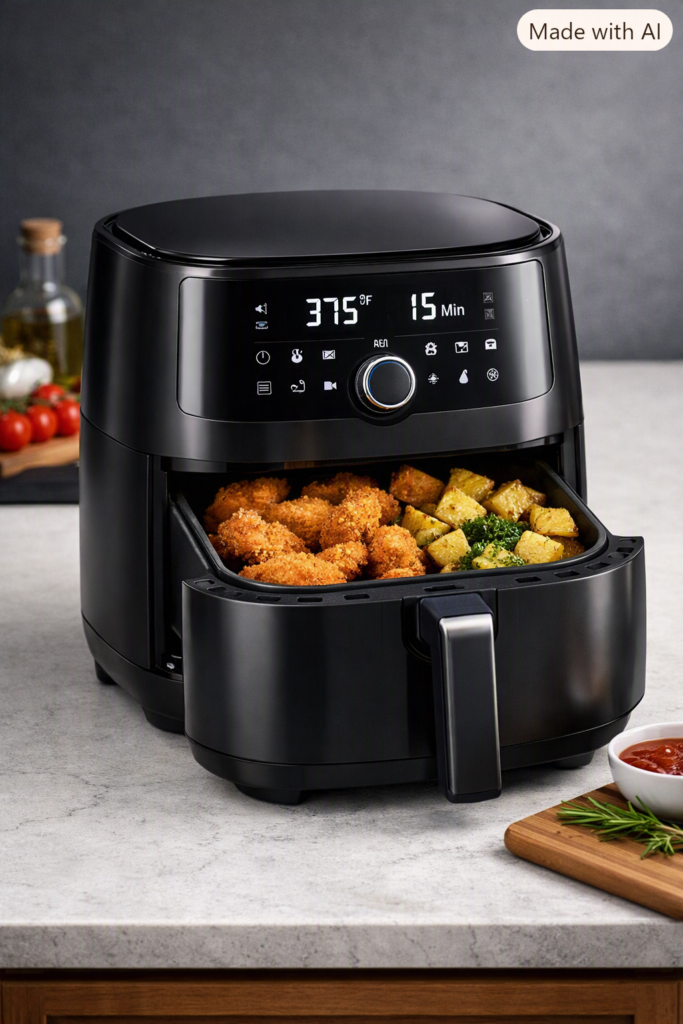
Air fryers are particularly useful for:
- French fries
- Chicken wings
- Samosas
- Paneer tikka
- Vegetables
- Frozen snacks
- Fish
- Potato wedges
- Sandwiches
- Reheating pizza and other leftovers
Many modern air fryers also include digital controls, cooking presets, adjustable temperatures and automatic timers.
What to Do Before Using Your Air Fryer for the First Time
Before cooking, take a few minutes to prepare the appliance properly.
1. Read the Manufacturer’s Instructions
Start by reading the user manual that came with your air fryer.
Different models can have different requirements for:
- Preheating
- Maximum food quantity
- Cleaning
- Dishwasher use
- Temperature settings
- Accessories
- Safety clearances
The manufacturer’s instructions should always take priority over general advice.
2. Remove All Packaging
Take the air fryer out of its packaging and remove:
- Plastic films
- Cardboard
- Foam
- Stickers that aren’t intended to remain
- Packaging material inside the basket
Check the basket and cooking chamber carefully before switching the appliance on.
3. Wash the Removable Parts
Wash the basket and removable cooking tray using warm water and mild dish soap unless the manufacturer specifies another cleaning method.
Dry all parts thoroughly before assembling the appliance.
Don’t immerse the main electrical unit in water.
4. Place It on a Suitable Surface
Put your air fryer on a stable, heat-resistant surface.
Leave adequate space around the appliance for ventilation according to the manufacturer’s instructions.
Avoid placing it directly against walls, underneath low cabinets, or near materials that could be damaged by heat.
Do You Need to Preheat an Air Fryer?
Sometimes.
Some recipes benefit from preheating, while many air fryers can cook food effectively without a separate preheating step.
If your recipe or manufacturer’s instructions recommend preheating, follow them.
A simple starting point is to preheat for a few minutes at the temperature specified by the recipe.
However, don’t assume that every air fryer requires preheating for every food.
How to Use an Air Fryer for the First Time
Once your air fryer is clean and ready, the basic process is straightforward.
Step 1: Choose What You Want to Cook
For your first attempt, choose something simple.
Good beginner foods include:
- Frozen French fries
- Potato wedges
- Chicken wings
- Samosas
- Paneer
- Vegetables
- Frozen snacks
Starting with a simple food helps you understand how quickly your particular air fryer cooks.
Step 2: Prepare the Food
Prepare the food according to the recipe.
If you’re using fresh vegetables or potatoes, cut them into reasonably similar sizes so they cook more evenly.
For foods that benefit from oil, lightly coat them rather than soaking them in oil.
Frozen foods can often go directly into the air fryer, but check the package instructions and your air fryer’s recommendations.
Step 3: Put the Food in the Basket
Place the food inside the cooking basket.
Avoid packing the basket too tightly.
Hot air needs room to circulate around the food. Overfilling can result in uneven cooking and less crispy food.
For many foods, arranging them in a relatively even layer works better than creating a large pile.
Step 4: Set the Temperature
Choose the appropriate cooking temperature.
If you’re following a recipe, use its recommended temperature as your starting point.
If you’re adapting an oven recipe, you may need to experiment because air fryers vary in airflow, basket size and heating performance.
Step 5: Set the Cooking Time
Set the timer according to the recipe or manufacturer’s guidance.
It’s often better to check food a little early when you’re cooking something for the first time.
Air fryers can cook relatively quickly, and different models can produce different results.
Step 6: Start Cooking
Press the start button or begin the cooking cycle according to your model’s instructions.
Some air fryers automatically pause when the basket is removed.
Others may require you to pause the cooking manually.
Step 7: Shake or Turn the Food
Some foods benefit from shaking the basket or turning the food halfway through cooking.
This is particularly useful for:
- French fries
- Potato wedges
- Frozen snacks
- Small vegetables
If the food is large or delicate, use suitable utensils rather than aggressively shaking the basket.
Step 8: Check for Doneness
When the timer approaches the end, check the food.
Don’t rely only on appearance or the preset timer.
For meat and poultry, use a food thermometer where appropriate and follow safe food-handling practices.
If the food needs more cooking, continue in short increments until it reaches the appropriate level of doneness.
Step 9: Remove the Food Safely
The basket and food can become extremely hot.
Use the handle and appropriate heat-resistant utensils.
Transfer the food to a plate or serving dish and allow it to cool as needed.
Air Fryer Temperature Guide for Beginners
Cooking temperatures vary by recipe and appliance, but this table can provide a useful starting point.
| Food | Approx. Temperature | Approx. Cooking Time |
|---|---|---|
| Frozen French fries | 180–200°C | 12–20 minutes |
| Potato wedges | 180–200°C | 15–25 minutes |
| Chicken wings | 180–200°C | 18–25 minutes |
| Samosas | 170–190°C | 10–18 minutes |
| Paneer tikka | 180–200°C | 10–15 minutes |
| Vegetables | 180–200°C | 10–20 minutes |
| Reheating pizza | 160–180°C | 3–8 minutes |
These are general starting ranges rather than universal cooking instructions. Food quantity, thickness and the particular air fryer can significantly affect cooking time.
How Much Oil Should You Use in an Air Fryer?
One of the biggest advantages of an air fryer is that you generally don’t need much oil.
For many foods, a light coating is enough.
You can:
- Toss vegetables with a small amount of oil
- Lightly brush food
- Use an appropriate oil spray if suitable for your appliance
Avoid pouring excessive oil into the basket.
An air fryer isn’t designed for deep frying, and adding large amounts of oil can create mess and potentially cause safety problems.
Should You Put Oil in the Air Fryer Basket?
Usually, you don’t need to add oil directly to the bottom of the basket.
If your recipe requires oil, it is generally better to lightly coat the food itself.
Follow the manufacturer’s instructions for your specific model.
How Full Should an Air Fryer Basket Be?
Avoid filling the basket to the top.
Overcrowding restricts airflow and can cause:
- Uneven cooking
- Soft rather than crispy food
- Longer cooking times
- Inconsistent browning
If you’re preparing a large quantity, cooking in two or more batches may produce better results.
This is particularly important when making French fries or other foods where crispiness matters.
Do You Need to Shake the Basket?
Not always.
Some foods benefit significantly from shaking or turning, while others can cook without it.
For foods such as fries, potato pieces and small frozen snacks, shaking halfway through cooking can help distribute heat more evenly.
Follow the recipe and your air fryer’s instructions.
Can You Put Frozen Food Directly Into an Air Fryer?
Many frozen foods can be cooked directly from frozen.
Examples include:
- French fries
- Nuggets
- Spring rolls
- Samosas
- Frozen vegetables
- Other packaged snacks
However, always check the food’s packaging instructions first.
Frozen foods can vary significantly in cooking requirements.
Can You Use Aluminum Foil in an Air Fryer?
It depends on the appliance and how the foil is used.
Some manufacturers allow aluminum foil in specific circumstances, while others may provide different instructions.
If foil is permitted, it should never block the air vents or interfere with airflow.
Don’t place loose foil in an empty air fryer where it could be lifted by circulating air and contact the heating element.
Always follow your manufacturer’s guidance.
Can You Use Parchment Paper in an Air Fryer?
Some air fryer-safe parchment products are designed for use in air fryers.
However, parchment paper should not be placed in the appliance by itself during preheating because the circulating air can move it toward the heating element.
Use parchment only when appropriate and follow the product and appliance instructions.
What Containers Can You Use in an Air Fryer?
Some heat-resistant containers can be used in an air fryer, but they must be suitable for the appliance and the temperatures involved.
Depending on the model and manufacturer, suitable cookware may include certain:
- Oven-safe glass containers
- Ceramic dishes
- Metal pans
- Silicone accessories
Never assume that a container is air-fryer safe simply because it is microwave-safe.
Check the manufacturer’s instructions and the cookware’s temperature rating.
How to Clean an Air Fryer After Use
Cleaning your air fryer after each use helps prevent buildup and unwanted odors.
Step 1: Let It Cool
Unplug the appliance and allow it to cool before cleaning.
Step 2: Remove the Basket
Take out the basket and removable cooking tray.
Step 3: Wash the Removable Parts
Use warm water and mild dish soap unless the manufacturer specifies another method.
Avoid abrasive cleaning tools that could damage a non-stick surface.
Step 4: Clean the Interior
Wipe the inside of the cooking chamber with an appropriate damp cloth once it has cooled.
Step 5: Clean the Exterior
Wipe the outside with a soft, slightly damp cloth.
Never immerse the main electrical appliance in water.
Step 6: Dry Everything
Allow removable parts to dry completely before putting the air fryer back together.
Common Air Fryer Mistakes Beginners Make
Overfilling the Basket
More food doesn’t always mean better efficiency. Overcrowding can prevent proper airflow.
Using Too Much Oil
An air fryer isn’t a deep fryer. Excess oil can create smoke, mess and potentially unsafe conditions.
Cooking Everything at the Same Temperature
Different foods require different temperatures and cooking times.
Never Checking Food
The timer is a guide, not a guarantee. Start checking unfamiliar foods before the expected finish time.
Forgetting to Shake or Turn Food
Some foods cook more evenly when moved halfway through the cooking cycle.
Blocking Ventilation
Don’t operate the air fryer in a way that blocks its ventilation openings.
Cleaning Only When It Looks Dirty
Grease and food residue can accumulate even when the basket doesn’t appear particularly dirty.
Regular cleaning is better than waiting for significant buildup.
Best Foods to Try First in an Air Fryer
If you’re completely new to air frying, start with foods that are forgiving and easy to monitor.
French Fries
Frozen French fries are an excellent starting point.
Try a moderate temperature first, shake the basket during cooking, and adjust the time based on how crispy you like them.
Potato Wedges
Fresh potatoes are another simple option.
Cut them into similar-sized pieces, lightly coat them with oil and seasonings, then air fry until browned and tender.
Paneer Tikka
Paneer and vegetables work particularly well in an air fryer.
Use appropriately sized pieces and avoid overcrowding the basket.
Samosas
Frozen samosas are convenient for beginners because preparation is minimal.
Check them during cooking to prevent excessive browning.
Chicken Wings
Chicken wings can become nicely browned in an air fryer, but always verify that poultry has reached a safe internal temperature.
How to Get Crispier Food in an Air Fryer
If your food isn’t as crispy as expected, try these simple adjustments:
- Don’t overcrowd the basket
- Dry fresh ingredients before cooking
- Use a small amount of oil where appropriate
- Shake or turn food halfway through
- Avoid excessively thick pieces
- Cook in batches when necessary
- Check whether preheating is recommended for your recipe
Remember that air-fried food won’t necessarily have exactly the same texture as traditionally deep-fried food.
How to Prevent Food From Sticking
Food can stick to the cooking basket for several reasons.
To reduce sticking:
- Avoid leaving food in the basket longer than necessary
- Lightly oil food when appropriate
- Don’t aggressively scrape the basket
- Use compatible accessories
- Clean the basket after use
- Follow the manufacturer’s instructions for maintaining the cooking surface
If the basket has a non-stick coating, avoid metal utensils that could damage it.
Is Preheating Always Necessary?
No.
Whether you need to preheat depends on the recipe, food and appliance.
Preheating can help with certain foods and recipes, particularly when you want the cooking process to begin immediately at the target temperature.
However, many air fryers are designed to cook effectively without a separate preheating step.
If you’re following a recipe, use its instructions as your starting point.
Air Fryer Safety Tips for First-Time Users
Keep these basic safety rules in mind:
- Read the manufacturer’s instructions before first use.
- Place the appliance on a stable, heat-resistant surface.
- Keep ventilation openings clear.
- Don’t fill the basket beyond the manufacturer’s recommended limit.
- Don’t put water or excessive oil into the appliance unless specifically instructed.
- Use heat-resistant tools when handling hot food.
- Don’t touch hot surfaces with bare hands.
- Unplug the appliance when it isn’t being used if recommended by the manufacturer.
- Allow the appliance to cool before cleaning.
- Keep children away from the hot appliance.
- Don’t leave cooking food unattended if your appliance instructions advise against it.
Frequently Asked Questions
How do I use an air fryer for the first time?
Clean the removable parts, place the air fryer on a suitable surface, prepare your food, place it in the basket without overcrowding, select the recommended temperature and time, and check the food before the cooking cycle ends.
Should I run my air fryer empty before using it?
Some manufacturers recommend an initial empty heating cycle, while others don’t. Check your specific model’s instructions rather than assuming it is necessary.
Do I need to preheat an air fryer?
Not always. Some recipes benefit from preheating, but many foods can be cooked without it.
Do I need oil in an air fryer?
Not necessarily. Many foods can be cooked with little or no added oil. A small amount may improve browning and crispness for certain foods.
Can I put frozen food in an air fryer?
Yes, many frozen foods can be cooked directly from frozen. Check the package instructions and adjust cooking time as needed.
Can I use an air fryer every day?
Yes. An air fryer can be used regularly as long as it is operated and maintained according to the manufacturer’s instructions.
How do I know when food is done?
Check the appearance and texture where appropriate. For meat and poultry, use a food thermometer to verify safe internal temperatures.
Why is my air-fried food not crispy?
Overcrowding, excess moisture, insufficient cooking time and too little airflow can affect crispiness. Try cooking smaller batches and drying fresh ingredients before cooking.
How often should I clean my air fryer?
It’s best to clean the removable cooking components after each use and clean the interior and exterior regularly according to the manufacturer’s instructions.
Final Tips for Your First Air Fryer Experience
Your first air-fryer cooking session doesn’t need to be complicated.
Start with a simple food, avoid overcrowding the basket, use a moderate temperature, check the food before the timer ends and make small adjustments the next time you cook.
The most important thing to remember is that every air fryer cooks slightly differently. Once you’ve used yours a few times, you’ll quickly learn how much time and heat your favorite foods need.
For beginners, the best approach is to start simple and experiment gradually. Before long, your air fryer can become a convenient tool for preparing everything from quick snacks and crispy vegetables to paneer, chicken and everyday meals.
Top Air Fryers Upto 45% OFF