
Home security has become more important than ever, but not every property has access to reliable internet. Whether you own a farmhouse, cabin, construction site, warehouse, RV, or remote vacation home, traditional WiFi security cameras simply aren’t practical.
Fortunately, wireless security cameras that work without WiFi provide a reliable solution. These cameras can record footage locally, use cellular networks, or operate completely offline while still offering excellent surveillance capabilities.
In this complete post, we’ll explain how no-WiFi security cameras work, their advantages, disadvantages, and how to choose the right one for your needs.
What Is a Wireless Security Camera Without WiFi?
A wireless security camera without WiFi is a surveillance camera that doesn’t rely on an internet connection for recording video.
Instead, it may use:
- Local SD card storage
- Built-in DVR/NVR recording
- Cellular (4G LTE/5G) networks
- Internal memory
- Portable battery power
- Solar charging
Although these cameras don’t require WiFi, many still allow you to access recordings later through removable storage or mobile networks.
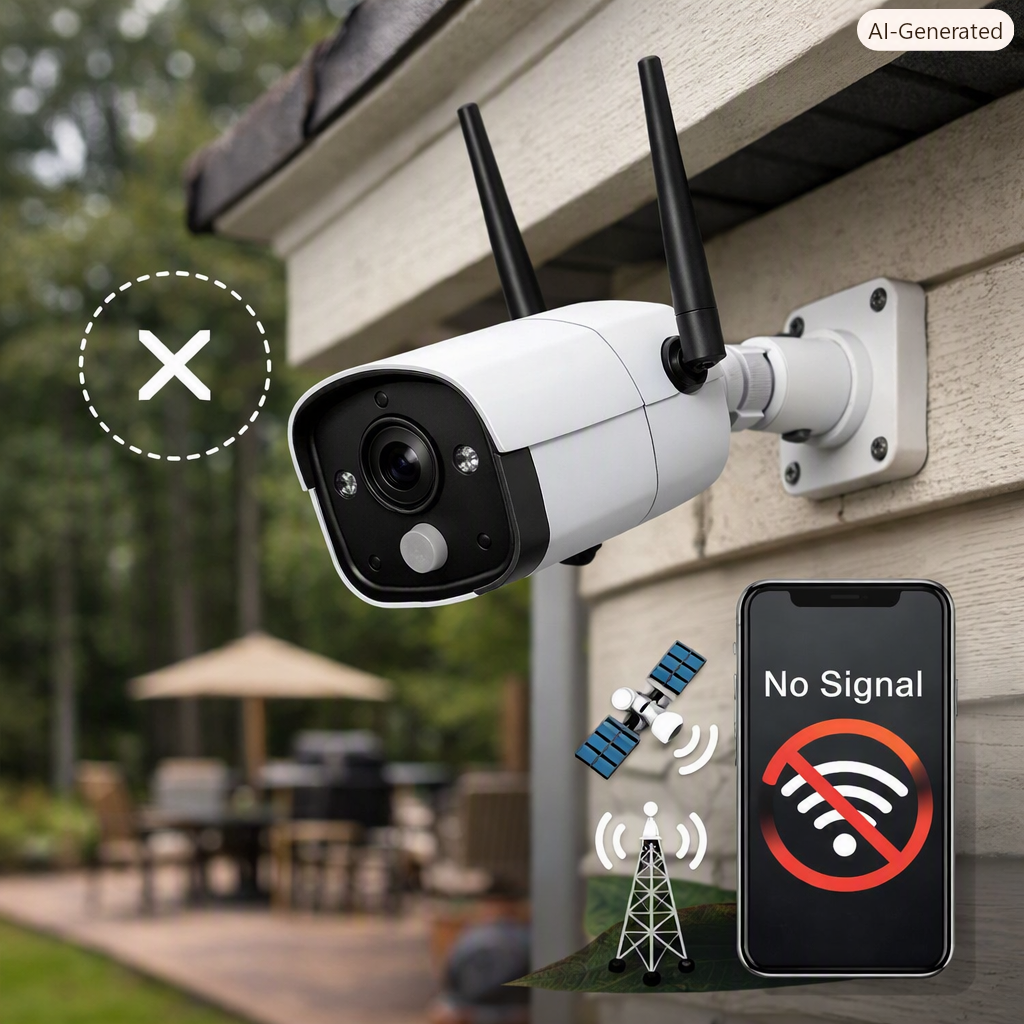
Do Wireless Cameras Really Work Without Internet?
Yes.
Many people confuse wireless with internet-connected.
Wireless simply means there are no video cables running between the camera and recorder.
Some wireless cameras can operate entirely offline by recording directly onto:
- MicroSD cards
- Local DVR systems
- NVR storage
- External hard drives
Internet is only required if you want:
- Live remote viewing
- Cloud storage
- Smartphone notifications
- Voice assistant integration
Types of Wireless Security Cameras That Don’t Need WiFi
1. Cellular 4G LTE Security Cameras
These cameras use a SIM card instead of WiFi.
Perfect for:
- Farms
- Construction sites
- Vacation homes
- Remote cabins
- Boats
- RVs
Pros
- Remote access anywhere
- Motion alerts
- Live streaming
- No broadband needed
Cons
- Requires cellular signal
- Monthly SIM data charges
2. SD Card Security Cameras
These cameras store recordings directly on a MicroSD card.
Ideal for:
- Apartments
- Garages
- Shops
- Small offices
Advantages include:
- No internet required
- No subscription fees
- Easy installation
3. DVR-Based Wireless Cameras
Some wireless cameras communicate with a DVR recorder without using WiFi.
Benefits include:
- Continuous recording
- Large storage capacity
- Multiple camera support
- Better reliability
4. Solar-Powered Wireless Cameras
Solar-powered cameras combine rechargeable batteries with solar panels.
Perfect for:
- Farms
- Outdoor gates
- Wildlife monitoring
- Remote locations
They can operate for months with little maintenance.
Benefits of Security Cameras Without WiFi
Better Privacy
Since footage stays locally, your videos are less vulnerable to cloud-based hacking.
Lower Long-Term Cost
You don’t have to pay for:
- Cloud subscriptions
- Internet plans
- Online storage
Reliable During Internet Outages
Even if your internet stops working, the camera continues recording.
Flexible Installation
Perfect for places where broadband isn’t available.
Examples include:
- Remote cabins
- Agricultural land
- Parking lots
- Warehouses
Are No-WiFi Cameras Truly Wireless?
It depends.
There are two categories:
Battery-Powered Wireless Cameras
These run entirely on batteries or solar power.
No power cable required.
Plug-In Wireless Cameras
These require electrical power but transmit video wirelessly.
Features to Look For
1. Video Resolution
Choose:
- 2K
- 4MP
- 5MP
- 4K
Higher resolution means clearer faces and license plates.
2. Night Vision
Look for:
- Infrared Night Vision
- Color Night Vision
- Smart Spotlights
3. Motion Detection
Advanced AI detection helps identify:
- Humans
- Vehicles
- Animals
- Packages
Reducing false alarms.
4. Battery Life
Quality cameras can last:
- 3 months
- 6 months
- Up to 1 year
Depending on motion activity.
5. Weather Resistance
Outdoor cameras should have:
- IP65
- IP66
- IP67 waterproof ratings
6. Local Storage Capacity
Support for:
- 128GB MicroSD
- 256GB
- 512GB
Longer recording history.
7. Solar Charging
A solar panel significantly reduces maintenance.
Best Places to Install
Wireless cameras without WiFi work well in:
- Farmhouses
- Construction sites
- Forest cabins
- Garages
- Storage units
- Vacation homes
- Parking areas
- Boats
- RVs
- Workshops
Pros and Cons
| Pros | Cons |
|---|---|
| No internet required | Remote viewing may be limited |
| Better privacy | Cellular models require SIM plans |
| Easy installation | Local storage can fill up |
| Lower operating cost | Some advanced features unavailable offline |
| Works during internet outages | Manual retrieval of recordings may be necessary |
Who Should Buy One?
These cameras are ideal for:
Homeowners
Protect your home without depending on WiFi.
Farmers
Monitor livestock and equipment remotely.
Business Owners
Secure warehouses and storage facilities.
Travelers
Watch over RVs and vacation homes.
Construction Companies
Monitor equipment theft at remote job sites.
Installation Tips
For the best performance:
- Install cameras at 8–10 feet high.
- Avoid pointing directly toward sunlight.
- Test motion detection before permanent installation.
- Keep solar panels facing maximum sunlight.
- Format SD cards regularly.
- Check battery levels monthly.
Frequently Asked Questions
Can wireless security cameras work without WiFi?
Yes. Many cameras record directly onto SD cards, DVRs, or use cellular networks instead of WiFi.
Do I need internet to record video?
No. Internet is only necessary for remote viewing and cloud services.
Can I watch recordings later?
Yes. You can access footage from SD cards, DVRs, or remotely if using a cellular-enabled camera.
Are no-WiFi cameras secure?
Yes. Local recording often offers greater privacy since footage isn’t stored on cloud servers.
Can battery-powered cameras work for months?
Yes. Many modern cameras operate for several months on one charge, especially when paired with solar panels.
Final Thoughts
Wireless security cameras that work without WiFi are an excellent choice for locations where traditional internet service is unavailable or unreliable. Whether you need to monitor a remote property, protect valuable equipment, or secure your home during internet outages, these cameras offer dependable surveillance without relying on constant connectivity.
Before purchasing, consider your recording needs, power source, storage capacity, and whether remote access is important. For many users, a battery-powered or solar-powered camera with local storage provides the perfect balance of convenience, privacy, and affordability.
By choosing the right no-WiFi security camera, you can enjoy reliable protection virtually anywhere—without being tied to an internet connection.