
When shopping for a new vacuum cleaner, one specification you’ll see repeatedly is suction power. Many manufacturers promote higher numbers as a sign of better performance, making it easy to assume that more suction automatically means a better vacuum.
In reality, suction power is only one part of the equation.
The best vacuum cleaner isn’t necessarily the one with the highest suction rating—it’s the one that delivers the right balance of airflow, brush design, filtration, and efficiency for your home. A vacuum with extremely powerful suction may be unnecessary for hard floors, while homes with thick carpets or shedding pets often benefit from stronger performance.
This guide explains what suction power really means, how it’s measured, and how much you actually need based on your flooring, lifestyle, and cleaning habits.
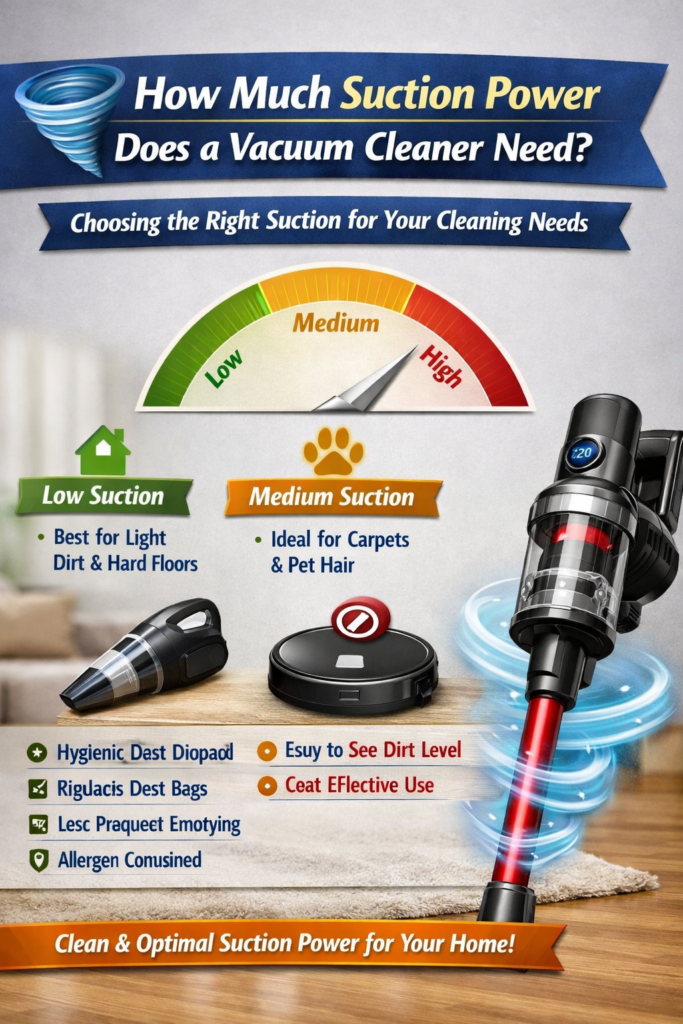
What Is Vacuum Cleaner Suction Power?
Suction power refers to a vacuum cleaner’s ability to lift dirt, dust, debris, and pet hair from surfaces.
A stronger vacuum creates greater airflow, allowing it to pull dirt from carpet fibers, floor gaps, upholstery, and other hard-to-clean areas.
However, cleaning performance depends on several factors working together:
- Motor efficiency
- Airflow
- Brush roll design
- Floor head design
- Filtration system
- Sealed airflow path
This is why two vacuum cleaners with similar motor ratings can perform very differently.
How Is Suction Power Measured?
Different manufacturers use different measurements, which can make comparisons confusing.
The most common units include:
Air Watts (AW)
Air Watts measure the actual cleaning power produced by the combination of airflow and suction.
This is one of the most useful measurements when comparing vacuum cleaners.
Pascals (Pa)
Robot vacuum cleaners commonly use Pascals.
Typical ranges include:
- 2,000–4,000 Pa: Everyday cleaning
- 4,000–8,000 Pa: Mixed flooring and pet hair
- 8,000 Pa and above: Premium robot vacuums with stronger pickup performance
Motor Power (Watts)
Many buyers mistakenly focus on motor wattage.
A 1000W or 2000W motor does not automatically mean better cleaning.
Motor wattage only indicates electrical power consumption—not actual suction performance.
Modern motors are often more efficient and can deliver stronger suction while consuming less electricity.
How Much Suction Power Do You Really Need?
The ideal suction depends on your home and cleaning requirements.
Small Apartments
Recommended suction:
120–150 Air Watts
Ideal for:
- Tiles
- Hardwood floors
- Laminate flooring
- Everyday dust
A lightweight cordless vacuum with moderate suction is usually sufficient.
Medium-Sized Homes
Recommended suction:
150–200 Air Watts
Suitable for:
- Mixed flooring
- Area rugs
- Furniture
- Everyday household cleaning
This range offers a good balance between cleaning power and energy efficiency.
Large Homes
Recommended suction:
200–250 Air Watts
Best for:
- Larger living spaces
- Frequent vacuuming
- Deep cleaning
- Multiple floor types
Homes with Pets
Recommended suction:
220–250+ Air Watts
Pet hair can become embedded in carpets, sofas, and upholstery.
Look for additional features such as:
- Motorized brush roll
- Anti-tangle technology
- HEPA filtration
- Pet-specific cleaning attachments
Thick Carpets
Dense carpets require stronger airflow and deeper suction.
Recommended range:
220–280 Air Watts
Combined with a rotating brush roll, this level of suction helps lift dirt trapped deep within carpet fibers.
Hardwood Floors
Hard floors don’t usually require maximum suction.
Recommended:
120–180 Air Watts
Many premium vacuums include adjustable suction settings to prevent lightweight rugs from being pulled upward while still removing dust effectively.
Why More Suction Isn’t Always Better
It’s easy to assume the highest suction rating is always the best choice, but that’s not necessarily true.
Excessive suction can:
- Make the vacuum difficult to push on carpets
- Drain cordless batteries more quickly
- Increase operating noise
- Lift lightweight rugs
- Consume more energy than necessary
The goal is efficient cleaning, not simply maximum power.
Other Features That Matter as Much as Suction
Brush Roll Design
A high-quality motorized brush roll helps loosen dirt before it’s removed by suction.
This is especially important for:
- Carpets
- Rugs
- Pet hair
Filtration System
A vacuum with a HEPA filter captures microscopic dust, pollen, and allergens, improving indoor air quality.
For allergy sufferers, filtration can be just as important as suction.
Adjustable Suction Modes
Different surfaces require different levels of suction.
Look for models with settings for:
- Hard floors
- Carpets
- Upholstery
- Curtains
- Eco mode
- Turbo mode
This improves cleaning performance while extending battery life on cordless models.
Sealed Airflow System
A sealed system prevents fine dust from escaping back into your home.
Combined with HEPA filtration, it ensures cleaner air while vacuuming.
Floor Detection Technology
Many modern vacuum cleaners automatically detect floor types and adjust suction accordingly.
Benefits include:
- Better cleaning performance
- Reduced battery usage
- Less manual adjustment
- Improved convenience
Recommended Suction Power by Home Type
| Home Type | Recommended Suction |
|---|---|
| Studio Apartment | 120–150 AW |
| Small Home | 150–180 AW |
| Medium Home | 180–220 AW |
| Large Home | 220–250 AW |
| Pet Owners | 220–250+ AW |
| Thick Carpets | 220–280 AW |
| Hardwood Floors | 120–180 AW |
Corded vs. Cordless Suction Power
Corded Vacuum Cleaners
- Continuous suction
- No battery limitations
- Ideal for large homes
- Better for extended deep cleaning
Cordless Vacuum Cleaners
- Lightweight
- Portable
- Convenient for daily cleaning
- Premium models now offer suction comparable to many corded vacuums
Battery technology has improved significantly, making cordless vacuums a practical option for most households.
Common Mistakes When Comparing Suction Power
Avoid these common buying mistakes:
- Judging a vacuum only by motor wattage
- Ignoring airflow and brush design
- Buying maximum suction for hard floors
- Forgetting to check filtration quality
- Overlooking battery runtime on cordless models
- Assuming higher numbers always mean better cleaning
A well-designed vacuum with moderate suction often outperforms a poorly designed model with higher advertised power.
Frequently Asked Questions
Is higher suction always better?
No. The right amount of suction depends on your flooring and cleaning needs. Balanced performance is more important than simply choosing the highest number.
How many Air Watts are enough for a home?
For most households, 150–220 Air Watts provides excellent cleaning performance across hard floors, rugs, and everyday dust.
Is 200 Air Watts enough for pet hair?
Yes. Around 200–250 Air Watts, combined with a motorized brush and HEPA filtration, is suitable for most homes with pets.
Does motor wattage determine suction?
No. Motor wattage measures electricity consumption, not cleaning performance. Airflow, engineering, and nozzle design are equally important.
What suction power is best for robot vacuum cleaners?
Most homes benefit from 4,000–6,000 Pascals, while premium robot vacuums with 8,000 Pa or more perform better on carpets and pet hair.
Final Thoughts
Suction power is one of the most important factors to consider when buying a vacuum cleaner, but it should never be the only one. A machine with balanced airflow, an efficient brush roll, high-quality filtration, and the right attachments will often outperform a vacuum that simply advertises a higher suction number.
For most households, a vacuum cleaner with 150–220 Air Watts offers the ideal balance of cleaning performance and efficiency. Larger homes, thick carpets, and households with pets may benefit from stronger suction, while smaller homes with mostly hard floors usually don’t require maximum power.
Before making your purchase, consider your flooring, home size, cleaning frequency, and lifestyle. Choosing a vacuum cleaner with the right level of suction—not just the highest number—will help you achieve cleaner floors, healthier indoor air, and better long-term value.
Key Takeaways
- Suction power is important, but airflow and brush design matter just as much.
- Air Watts are a better indicator of cleaning performance than motor wattage.
- Most homes perform well with 150–220 AW.
- Homes with pets and thick carpets benefit from 220 AW or higher.
- Adjustable suction settings improve efficiency across different floor types.
- HEPA filtration and sealed systems enhance indoor air quality.
- Compare overall performance rather than focusing on a single specification.