
Buying a vacuum cleaner involves more than choosing between a corded or cordless model. One of the biggest decisions you’ll make is whether to buy a bagged or bagless vacuum cleaner. While both are designed to remove dust, dirt, and debris effectively, they differ significantly in maintenance, hygiene, running costs, and overall user experience.
Many first-time buyers assume that one option is universally better than the other. In reality, the best choice depends on your cleaning habits, budget, household size, and whether anyone in your home has allergies or asthma.
In this detailed buying guide, we’ll explain how bagged and bagless vacuum cleaners work, compare their advantages and disadvantages, and help you determine which type best suits your home.
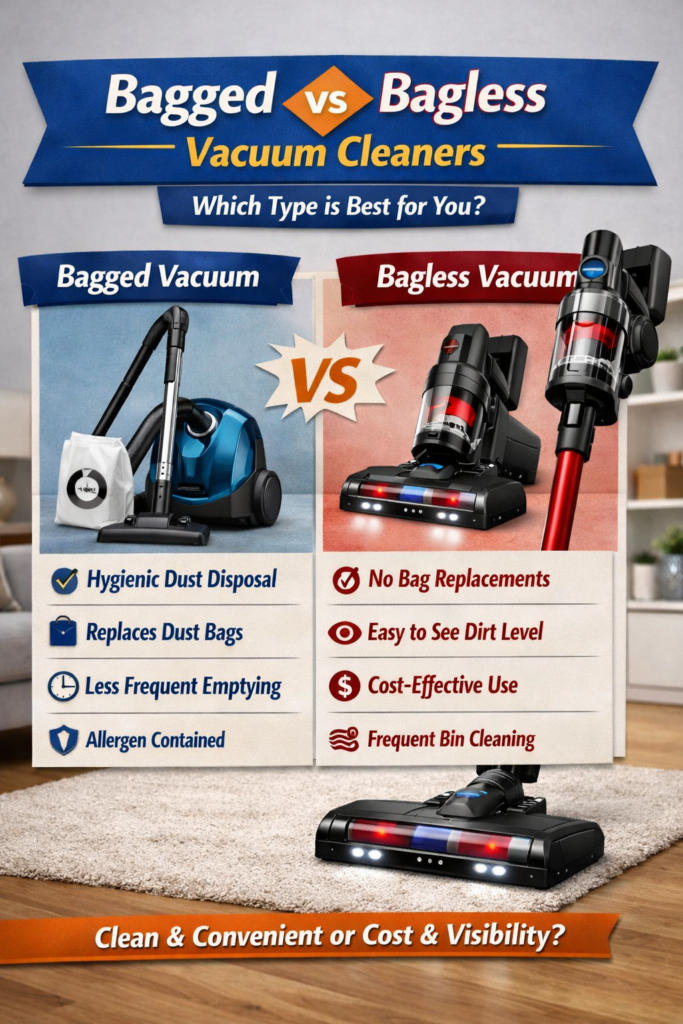
What Is a Bagged Vacuum Cleaner?
A bagged vacuum cleaner stores dirt, dust, and debris inside a replaceable collection bag. The bag acts as both the dust container and part of the filtration system.
Once the bag becomes full, it is removed, sealed, and replaced with a new one.
This design has been trusted for decades because it offers excellent dust containment and hygienic disposal.
What Is a Bagless Vacuum Cleaner?
A bagless vacuum cleaner collects dust inside a reusable plastic dustbin instead of a disposable bag.
When the dustbin is full, it can be emptied into a trash bin, cleaned if necessary, and reused.
Most modern bagless models use cyclone technology to separate dust from airflow before it reaches the filter.
Quick Comparison: Bagged vs Bagless Vacuum Cleaners
| Feature | Bagged Vacuum Cleaner | Bagless Vacuum Cleaner |
|---|---|---|
| Dust Collection | Disposable bag | Reusable dustbin |
| Maintenance | Replace bags | Empty and clean dustbin |
| Running Cost | Ongoing bag purchases | Minimal ongoing cost |
| Dust Exposure | Very low | Higher during emptying |
| Allergy Friendly | Excellent | Good (depends on filtration) |
| Filtration | Excellent | Very good with HEPA filters |
| Capacity | Usually larger | Usually smaller |
| Convenience | Less frequent emptying | Easy to monitor dust level |
| Eco-Friendly | Creates bag waste | Reusable container |
Advantages of Bagged Vacuum Cleaners
1. Cleaner Dust Disposal
One of the biggest advantages of a bagged vacuum cleaner is hygienic dust disposal.
When the bag is full, you simply remove and discard it without releasing much dust back into the air.
This makes bagged models particularly suitable for people with allergies or asthma.
2. Better for Allergy Sufferers
Many bagged vacuum cleaners use multi-layer filtration bags that trap fine dust, pollen, and allergens.
Combined with a sealed HEPA filtration system, they help improve indoor air quality by minimizing airborne particles during disposal.
3. Less Frequent Emptying
Bagged vacuums typically have larger capacities than bagless models.
This means you can vacuum multiple rooms before needing to replace the bag.
4. Cleaner Interior
Because dirt stays inside the disposable bag, the inside of the vacuum cleaner generally remains cleaner, reducing the need for frequent internal cleaning.
Disadvantages of Bagged Vacuum Cleaners
Ongoing Cost
Replacement bags must be purchased regularly, increasing long-term ownership costs.
Reduced Suction When Bag Is Full
As the bag fills with debris, airflow may decrease, resulting in reduced suction until the bag is replaced.
Limited Availability of Bags
Some older or discontinued models require specific replacement bags that may become difficult to find.
Advantages of Bagless Vacuum Cleaners
1. No Replacement Bags Required
One of the main reasons homeowners choose bagless vacuums is that they eliminate the recurring expense of disposable bags.
Simply empty the dustbin and continue cleaning.
2. Lower Long-Term Cost
Although some bagless models have a higher purchase price, they generally cost less to maintain because there are no replacement bags to buy.
3. Transparent Dust Container
Most bagless vacuums feature a clear dustbin, allowing you to see when it needs emptying.
This makes maintenance simple and helps ensure consistent performance.
4. Cyclonic Technology
Many modern bagless vacuums use cyclonic separation to spin dust away from the airflow.
Benefits include:
- More consistent suction
- Reduced filter clogging
- Improved cleaning performance
Disadvantages of Bagless Vacuum Cleaners
More Dust Exposure
Emptying the dustbin can release fine dust back into the air.
This may be uncomfortable for allergy sufferers if the dustbin isn’t emptied carefully.
More Frequent Cleaning
Bagless vacuums often require regular cleaning of:
- Dustbin
- Filters
- Cyclone chamber
- Brush rolls
Routine maintenance is essential to maintain peak performance.
Smaller Dust Capacity
Most bagless models have smaller containers, requiring more frequent emptying during large cleaning sessions.
Performance Comparison
Suction Power
Winner: Tie
Modern bagged and bagless vacuum cleaners both deliver excellent suction when properly maintained.
Bagged vacuums may lose some airflow as the bag fills, while bagless models can lose performance if filters become clogged.
Filtration
Winner: Bagged
Bagged vacuum cleaners generally provide better dust containment because the bag itself acts as an additional filter.
When combined with a HEPA filter, they are an excellent choice for households with allergy sufferers.
Maintenance
Winner: Bagless
Bagless vacuums eliminate the need to purchase replacement bags.
However, they require more frequent cleaning of filters and dust containers.
Running Costs
Winner: Bagless
Although filters occasionally need replacement, bagless vacuums typically have lower ongoing costs because reusable dustbins replace disposable bags.
Hygiene
Winner: Bagged
Bagged vacuum cleaners minimize contact with dust during disposal, making them the more hygienic option.
Environmental Impact
Winner: Bagless
Reusable dustbins reduce waste associated with disposable bags.
However, washable filters should be maintained properly to maximize their lifespan.
Which Vacuum Cleaner Should You Choose?
Choose a Bagged Vacuum Cleaner If You:
- Have allergies or asthma
- Want cleaner dust disposal
- Prefer less maintenance
- Have pets that shed heavily
- Vacuum large homes regularly
Choose a Bagless Vacuum Cleaner If You:
- Want to avoid buying replacement bags
- Prefer lower long-term maintenance costs
- Like seeing how much dust has been collected
- Don’t mind cleaning filters regularly
- Want an eco-friendlier reusable dust container
Best Choice for Different Homes
| Home Type | Recommended Option |
| Apartment | Bagless |
| Large Home | Bagged |
| Pet Owners | Bagged or Bagless with HEPA Filter |
| Allergy Sufferers | Bagged |
| Budget Buyers | Bagless |
| Everyday Cleaning | Bagless |
| Deep Cleaning | Bagged |
Tips for Getting the Best Performance
Regardless of which type you choose:
- Empty or replace the dust container before it becomes completely full.
- Clean or replace filters according to the manufacturer’s recommendations.
- Remove hair and debris from brush rolls regularly.
- Check hoses for blockages.
- Store the vacuum in a dry location.
Proper maintenance helps maintain strong suction and extends the life of your vacuum cleaner.
Common Buying Mistakes
Avoid these common mistakes:
- Choosing based only on purchase price
- Ignoring filter quality
- Overlooking ongoing maintenance costs
- Buying the wrong capacity for your home size
- Forgetting to check replacement filter availability
- Assuming bagless models require no maintenance
Frequently Asked Questions
Which vacuum cleaner is better: bagged or bagless?
Neither is universally better. Bagged vacuums excel in hygiene and allergen control, while bagless models offer lower running costs and greater convenience.
Are bagless vacuum cleaners less powerful?
No. Modern bagless vacuums provide excellent suction when filters are clean and maintained properly.
Do bagged vacuum cleaners lose suction?
Some models may experience reduced airflow as the bag fills, although many premium vacuums are designed to minimize this effect.
Which type is better for allergies?
Bagged vacuum cleaners with sealed HEPA filtration are generally considered the best option because they reduce dust exposure during disposal.
Which is cheaper over time?
Bagless vacuum cleaners usually have lower long-term operating costs because they don’t require disposable bags, though filters still need periodic replacement.
Conclusion
Both bagged and bagless vacuum cleaners are capable of delivering excellent cleaning performance when matched to the right household and maintained properly. The best option depends on your priorities rather than a single “winner.”
If hygiene, superior dust containment, and cleaner disposal are your top concerns—especially if someone in your home has allergies or asthma—a bagged vacuum cleaner is often the better choice. The sealed bags help reduce exposure to fine dust and allergens, making maintenance cleaner and more comfortable.
On the other hand, if you want lower ongoing costs, the convenience of a reusable dust container, and the ability to see when the bin needs emptying, a bagless vacuum cleaner is an excellent option. Just be prepared to clean filters and empty the dustbin regularly to maintain peak performance.
Before making your purchase, consider your home size, cleaning frequency, budget, and maintenance preferences. Choosing the vacuum cleaner that fits your lifestyle will provide better long-term satisfaction than simply selecting the latest or most expensive model.
Key Takeaways
- Bagged vacuum cleaners offer cleaner dust disposal and are ideal for allergy sufferers.
- Bagless models eliminate the need for replacement bags, reducing long-term costs.
- Both types can deliver excellent suction with proper maintenance.
- HEPA filtration improves indoor air quality regardless of the collection system.
- Your cleaning habits and maintenance preferences should guide your decision.