
The Future of Wireless Security Cameras: Smarter, Safer, and More Connected Than Ever
Wireless security cameras have transformed home and business surveillance over the past decade. What began as simple motion-detection devices has evolved into intelligent security systems powered by artificial intelligence, cloud computing, edge processing, and smart home integration.
As we move through 2026, wireless security cameras are becoming more proactive, autonomous, and efficient than ever before. From AI-powered threat detection to solar-powered operation and ultra-high-resolution video, the latest innovations are redefining how we protect our homes, families, and businesses.
In this post, we’ll explore the biggest trends shaping the future of wireless security cameras in 2026 and beyond.
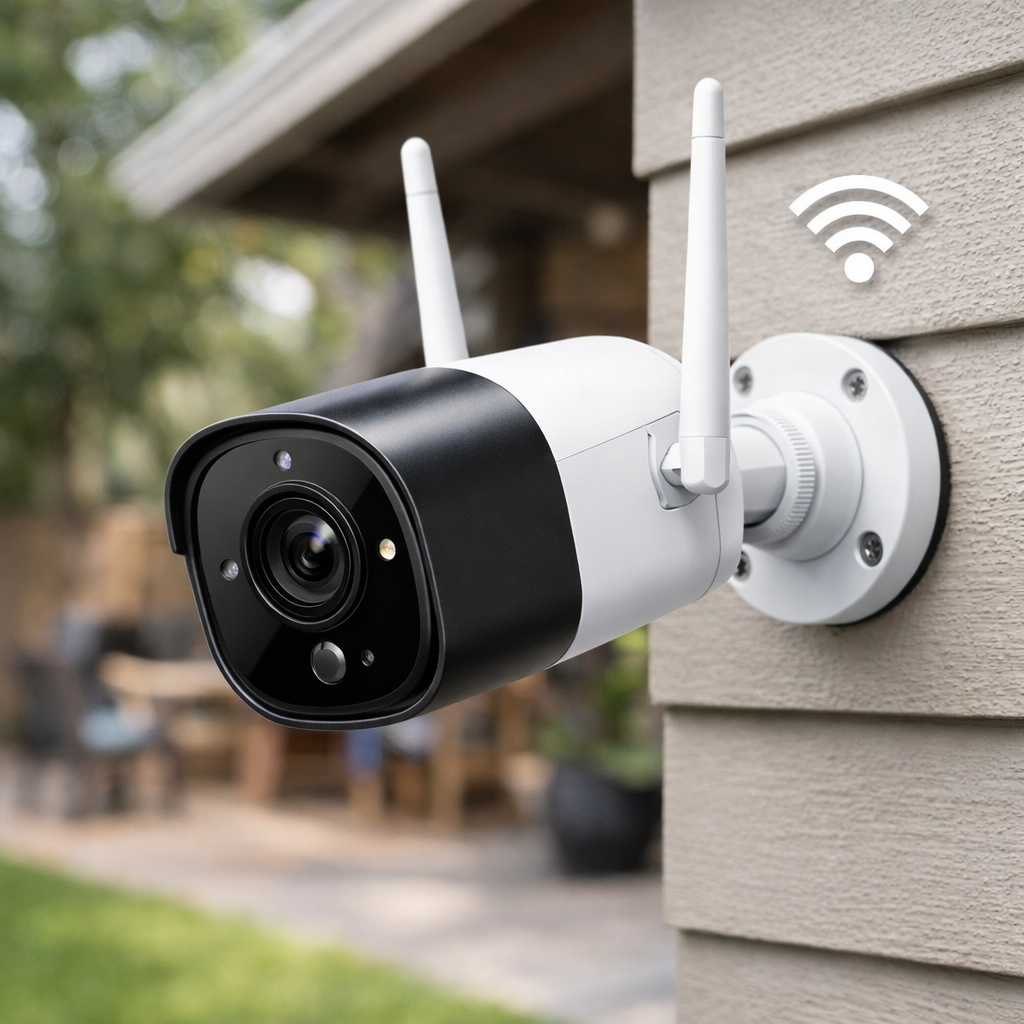
Why Wireless Security Cameras Continue to Grow in Popularity
The global demand for wireless surveillance solutions continues to rise because consumers want:
- Easier installation
- Remote monitoring capabilities
- Smart home integration
- Lower maintenance requirements
- Improved video quality
- Enhanced privacy controls
- Affordable security solutions
Unlike traditional CCTV systems that require extensive wiring, wireless cameras offer flexibility, scalability, and convenience for modern homes.
1. AI-Powered Threat Detection Is Becoming Smarter
Artificial intelligence is no longer a premium feature—it’s becoming a standard requirement.
What AI Cameras Can Detect in 2026
Modern wireless cameras can identify:
✅ People
✅ Vehicles
✅ Packages
✅ Pets
✅ Faces
✅ Unusual activity
✅ Suspicious behavior patterns
Rather than sending alerts for every movement, AI-powered systems analyze events and prioritize real security threats.
Future Development
Next-generation AI cameras are expected to:
- Predict suspicious behavior before incidents occur
- Distinguish between family members and strangers
- Reduce false alarms by over 95%
- Learn homeowner routines automatically
2. Edge AI Processing Reduces Cloud Dependence
One of the biggest innovations in 2026 is edge computing.
Instead of sending every video clip to cloud servers, modern cameras process data locally using onboard AI chips.
Benefits of Edge Processing
- Faster alerts
- Enhanced privacy
- Lower bandwidth usage
- Reduced cloud storage costs
- Improved offline functionality
Consumers increasingly prefer cameras that keep sensitive footage stored locally rather than entirely in the cloud.
3. 4K and Beyond: Ultra-HD Video Becomes Standard
Video quality continues to improve dramatically.
Resolution Evolution
| Year | Typical Resolution |
|---|---|
| 2020 | 1080p |
| 2023 | 2K |
| 2025 | 4K |
| 2026 | 4K+ AI Enhanced |
Modern wireless cameras now capture:
- License plate details
- Facial features
- Small objects
- Nighttime footage with greater clarity
AI-powered image enhancement also improves visibility during rain, fog, and low-light conditions.
4. Solar-Powered Security Cameras Gain Momentum
Battery technology has improved significantly, but solar charging is becoming the preferred solution.
Advantages of Solar-Powered Cameras
- Virtually unlimited operation
- Reduced maintenance
- Lower ownership costs
- Environmentally friendly
Many premium wireless security cameras can now operate continuously with only a few hours of sunlight daily.
This trend is expected to accelerate as homeowners seek energy-efficient smart home solutions.
5. Smart Home Integration Reaches New Levels
Wireless security cameras are increasingly becoming central components of smart home ecosystems.
Integration Capabilities in 2026
Modern cameras can interact with:
- Smart locks
- Video doorbells
- Smart lights
- Smart speakers
- Alarm systems
- Home automation hubs
Imagine a camera detecting a stranger and automatically:
- Turning on floodlights
- Locking smart doors
- Sending alerts to your phone
- Triggering an alarm
This level of automation is becoming increasingly common.
6. Color Night Vision Continues to Improve
Traditional infrared night vision often produces black-and-white footage.
Today’s advanced cameras use:
- Larger image sensors
- AI image enhancement
- Low-light processing
- Smart HDR technology
Benefits
- Better identification of intruders
- Improved evidence collection
- Enhanced situational awareness
Future systems will deliver near-daylight image quality even in extremely dark conditions.
7. Advanced Facial Recognition Technology
Facial recognition is evolving rapidly.
Future wireless security cameras may:
- Recognize family members instantly
- Detect known visitors
- Identify delivery personnel
- Create customized notifications
For example:
“John arrived home at 5:45 PM.”
instead of
“Motion detected.”
This creates a more personalized and useful security experience.
8. Privacy-Focused Security Systems
As cameras become smarter, privacy concerns are also increasing.
Manufacturers are responding with:
Privacy Innovations
- End-to-end encryption
- Local storage options
- User-controlled data sharing
- Privacy zones
- AI processing without cloud uploads
Consumers increasingly favor brands that prioritize transparency and data protection.
9. Subscription-Free Models Gain Popularity
Many users are frustrated with monthly cloud storage fees.
As a result, manufacturers are focusing on:
- Local storage solutions
- Built-in memory
- Home base storage systems
- NAS compatibility
The future will likely see more cameras offering premium features without recurring subscriptions.
10. Multi-Camera AI Collaboration
One exciting innovation emerging in 2026 is collaborative surveillance.
Multiple cameras can now work together.
Example
A person enters the driveway.
Camera A detects movement.
Camera B tracks the person approaching the front door.
Camera C monitors backyard activity.
The system creates a single event timeline instead of separate alerts.
This improves situational awareness and reduces notification overload.
11. 5G Connectivity Expands Wireless Surveillance
The growth of 5G networks enables:
- Faster video streaming
- Lower latency
- Better remote monitoring
- Higher-resolution uploads
Wireless cameras no longer need to rely solely on traditional Wi-Fi networks.
This is particularly useful for:
- Farms
- Construction sites
- Remote properties
- Outdoor surveillance
12. Predictive Security Analytics
The next frontier of surveillance is predictive security.
Future AI systems may analyze:
- Visitor patterns
- Movement trends
- Behavioral anomalies
And proactively warn homeowners about potential threats before incidents occur.
While still developing, predictive security could become a major trend over the next few years.
What Consumers Should Look for in 2026
When buying a wireless security camera, prioritize:
Essential Features
✔ 2K or 4K Resolution
✔ AI Person Detection
✔ Local Storage Support
✔ Smart Home Compatibility
✔ Color Night Vision
✔ Weather Resistance
✔ Long Battery Life
✔ Strong Privacy Controls
Premium Features
✔ Solar Charging
✔ Facial Recognition
✔ Edge AI Processing
✔ Multi-Camera Tracking
✔ 5G Connectivity
Challenges Facing Future Security Cameras
Despite rapid innovation, several challenges remain:
Cybersecurity Risks
Connected devices remain attractive targets for hackers.
Privacy Regulations
Governments are introducing stricter surveillance laws.
Battery Limitations
Higher-resolution recording increases power consumption.
Data Storage Costs
Growing video quality demands larger storage capacities.
Manufacturers will need to balance innovation, privacy, and affordability.
Conclusion
The future of wireless security cameras in 2026 is remarkably promising. Advances in artificial intelligence, edge computing, solar power, smart home integration, and ultra-high-definition imaging are transforming security systems into intelligent guardians capable of protecting homes more effectively than ever before.
For homeowners and businesses alike, the next generation of wireless cameras offers a compelling combination of convenience, automation, privacy, and powerful threat detection. As technology continues to evolve, security cameras will become increasingly proactive—helping prevent incidents before they happen rather than simply recording them.
Investing in a modern wireless security camera today means preparing your home for the smarter, safer future of connected security.