
Why Comfort Matters More Than Ever in a School Bag
Students today spend more time at school than ever before. Between regular classes, extracurricular activities, tuition sessions, sports practices, and long commutes, many students carry their school bags for several hours each day. As a result, comfort has become one of the most important factors when choosing the right backpack.
A poorly designed school bag can cause shoulder pain, back discomfort, poor posture, and unnecessary fatigue. On the other hand, a comfortable backpack helps students stay organized, move freely, and focus on learning rather than dealing with physical strain.
Parents, teachers, and health experts increasingly recommend ergonomic and well-designed school bags that provide proper support while carrying books, laptops, lunch boxes, and other daily essentials. The good news is that modern backpacks are designed to combine comfort, durability, and style, making it easier than ever to find the perfect school bag.
In this guide, we’ll explore what makes a school bag comfortable for long school hours and the key features students should look for before making a purchase.
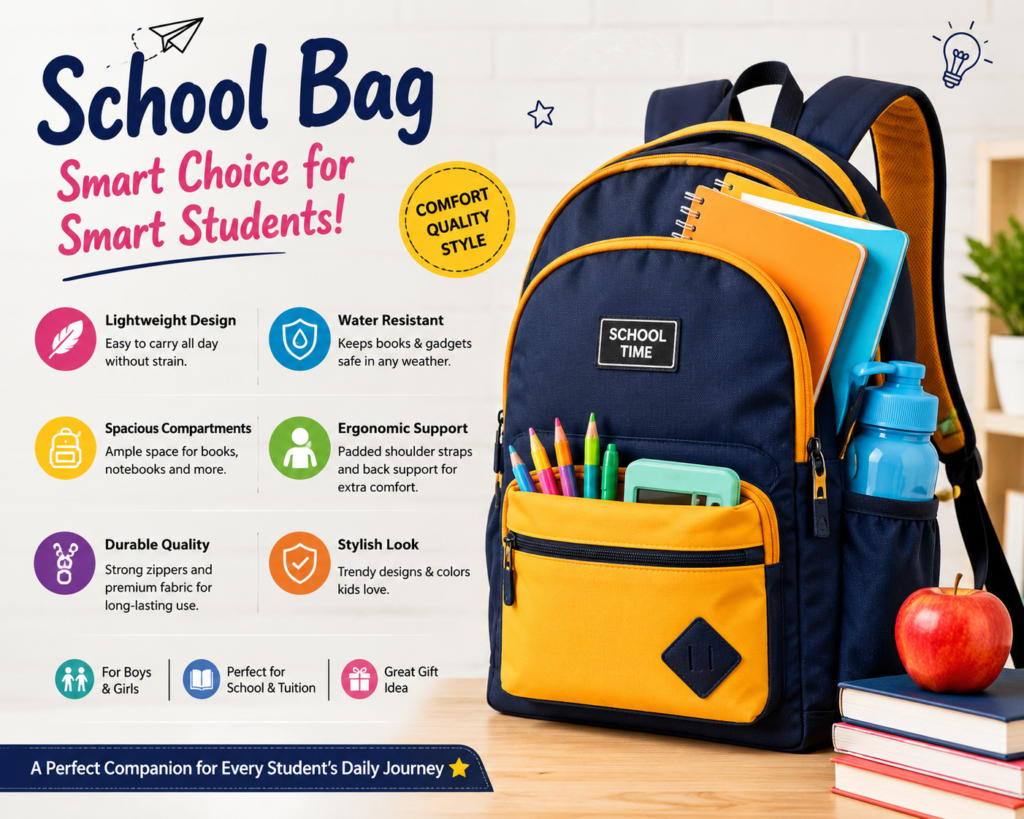
Why Students Need Comfortable School Bags
Many students carry:
- Textbooks
- Notebooks
- Laptops
- Tablets
- Water bottles
- Lunch boxes
- Sports gear
- Stationery supplies
The combined weight can place significant stress on the body if the backpack is not designed properly.
A comfortable school bag helps by:
- Reducing shoulder strain
- Improving posture
- Distributing weight evenly
- Increasing mobility
- Minimizing fatigue
For students with long school days, comfort can directly impact their daily experience.
Key Features of a Comfortable School Bag
1. Padded Shoulder Straps
One of the most important comfort features is thick, padded shoulder straps.
Benefits include:
- Reduced shoulder pressure
- Better weight distribution
- Increased carrying comfort
- Less irritation during long use
Wide straps are generally more comfortable than narrow ones because they spread weight across a larger area.
2. Ergonomic Back Support
Ergonomic backpacks are specifically designed to support the natural shape of the back.
Features may include:
- Contoured padding
- Structured back panels
- Weight-balancing design
- Reinforced support zones
These features help maintain proper posture throughout the day.
3. Lightweight Construction
A heavy backpack becomes even heavier when filled with books and supplies.
Lightweight materials such as:
- Polyester
- Nylon
- Ripstop fabric
help reduce the backpack’s overall weight without sacrificing durability.
Students often prefer lightweight bags because they are easier to carry during long school hours.
4. Breathable Back Panels
Back sweat can become uncomfortable during hot weather or long commutes.
Modern backpacks often include:
- Mesh padding
- Ventilation channels
- Airflow systems
These features improve breathability and keep students more comfortable throughout the day.
5. Adjustable Straps
Every student has a different body type and height.
Adjustable straps allow students to:
- Customize the fit
- Improve balance
- Reduce strain
- Increase carrying efficiency
A properly fitted backpack feels significantly more comfortable than one that hangs too low or too high.
Best Types of Comfortable School Bags
Multi-Compartment School Bags
These backpacks help distribute weight more evenly by separating items into multiple sections.
Advantages:
- Better organization
- Reduced shifting of contents
- Improved balance
- Easier access to essentials
They are among the most popular choices for students.
Laptop School Bags
Students increasingly carry electronic devices to school and college.
Laptop backpacks typically feature:
- Padded compartments
- Reinforced support
- Organized storage
- Balanced weight distribution
These designs provide both comfort and protection.
Ergonomic Backpacks
Ergonomic backpacks are specifically designed for extended use.
Features include:
- Back support systems
- Chest straps
- Thick padding
- Weight-distribution technology
These are excellent options for students carrying heavy loads.
Lightweight Backpacks
Students who prioritize comfort often choose lightweight designs.
Benefits:
- Reduced fatigue
- Easier commuting
- Better mobility
- Increased flexibility
Lightweight backpacks are particularly popular among younger students.
Trolley School Bags
For students carrying especially heavy books, trolley bags can be an effective solution.
Advantages:
- Minimal physical strain
- Easy transportation
- Suitable for younger children
- Large storage capacity
Many parents prefer trolley bags for primary school students.
How Comfortable School Bags Improve Student Health
Better Posture
Properly designed backpacks encourage healthier posture and reduce unnecessary strain on the spine.
Reduced Back Pain
Balanced weight distribution helps minimize stress on muscles and joints.
Less Shoulder Pressure
Padded straps improve carrying comfort throughout the day.
Increased Energy
Students expend less energy carrying their belongings, helping them stay active and focused.
Comfortable backpacks contribute to both physical well-being and academic productivity.
Tips for Packing a School Bag Comfortably
Even the best backpack can become uncomfortable if packed incorrectly.
Follow these simple tips:
Place Heavy Items Closest to the Back
This helps maintain balance and reduces strain.
Use Multiple Compartments
Distribute weight evenly throughout the backpack.
Avoid Carrying Unnecessary Items
Regularly remove items that are not needed.
Adjust the Straps Properly
The backpack should sit comfortably against the back rather than hanging too low.
Keep Weight Balanced
Avoid placing all heavy items on one side.
These habits improve comfort regardless of the backpack type.
Common Mistakes When Buying a School Bag
Choosing Style Over Comfort
A trendy backpack should still provide proper support.
Ignoring Padding
Thin straps often become uncomfortable during extended use.
Buying an Oversized Backpack
Large bags may encourage overpacking and increase overall weight.
Overlooking Material Quality
Poor-quality materials can wear out quickly and reduce comfort.
Skipping Ergonomic Features
Supportive design elements often make a significant difference during long school hours.
What Students Should Look for Before Buying
Before purchasing a school bag, consider:
- Backpack weight
- Padding quality
- Number of compartments
- Back support features
- Material durability
- Adjustable straps
- Storage capacity
- Laptop compatibility
These features help ensure long-term comfort and usability.
Conclusion
Comfortable school bags are no longer a luxury—they are a necessity for students who spend long hours carrying books, devices, and daily essentials. A well-designed backpack can improve posture, reduce physical strain, increase organization, and make school life significantly more enjoyable.
Whether you’re a student preparing for a new academic year or a parent searching for the right backpack, prioritizing comfort is one of the smartest decisions you can make. Features like padded shoulder straps, ergonomic support, lightweight construction, and organized compartments can transform the daily school experience.
The best school bag isn’t necessarily the most expensive or the most fashionable—it’s the one that supports students comfortably throughout every lesson, commute, and activity.